A new report outlines the critical gaps in finance for super pollutant reductions, highlighting the need for strategic investments to combat climate change.

State of Super Pollutant Abatement Finance, collaboratively produced by Climate Policy Initiative (CPI) and the Climate and Clean Air Coalition (CCAC), marks a pivotal first step in understanding the financial landscape aimed at reducing super pollutants. This seminal report provides an initial overview of the financing flows, identifies substantial gaps in investment, and outlines necessary actions to enhance funding levels.
Super pollutants, including methane, black carbon, and hydrofluorocarbons (HFCs), are not as commonly recognized as greenhouse gases like carbon dioxide, yet they have a disproportionately high impact on global warming. Together, they contribute to around half of today's warming, with methane being particularly potent as it can trap over 80 times more heat than carbon dioxide over a 20-year period. These pollutants disintegrate relatively quickly in the atmosphere, making their immediate reduction one of the most effective strategies to curb near-term temperature rises—essential for limiting the extent of climate change.
Current Financial Flows for Super Pollutants
In 2023, only about US$9 billion was allocated to address super pollutants, representing approximately 0.5% of global climate mitigation finance. Despite their significant influence on warming, this funds a mere fraction of what is needed. Specifically, methane, which garnered the largest share at 59% of the total super pollutant financing, is still severely underfunded, receiving only $5.2 billion. This amount represents just 4% of the financing required to meet the targets set by the Global Methane Pledge and only 18% of the commitments made by countries in their Nationally Determined Contributions and Methane Action Plans.
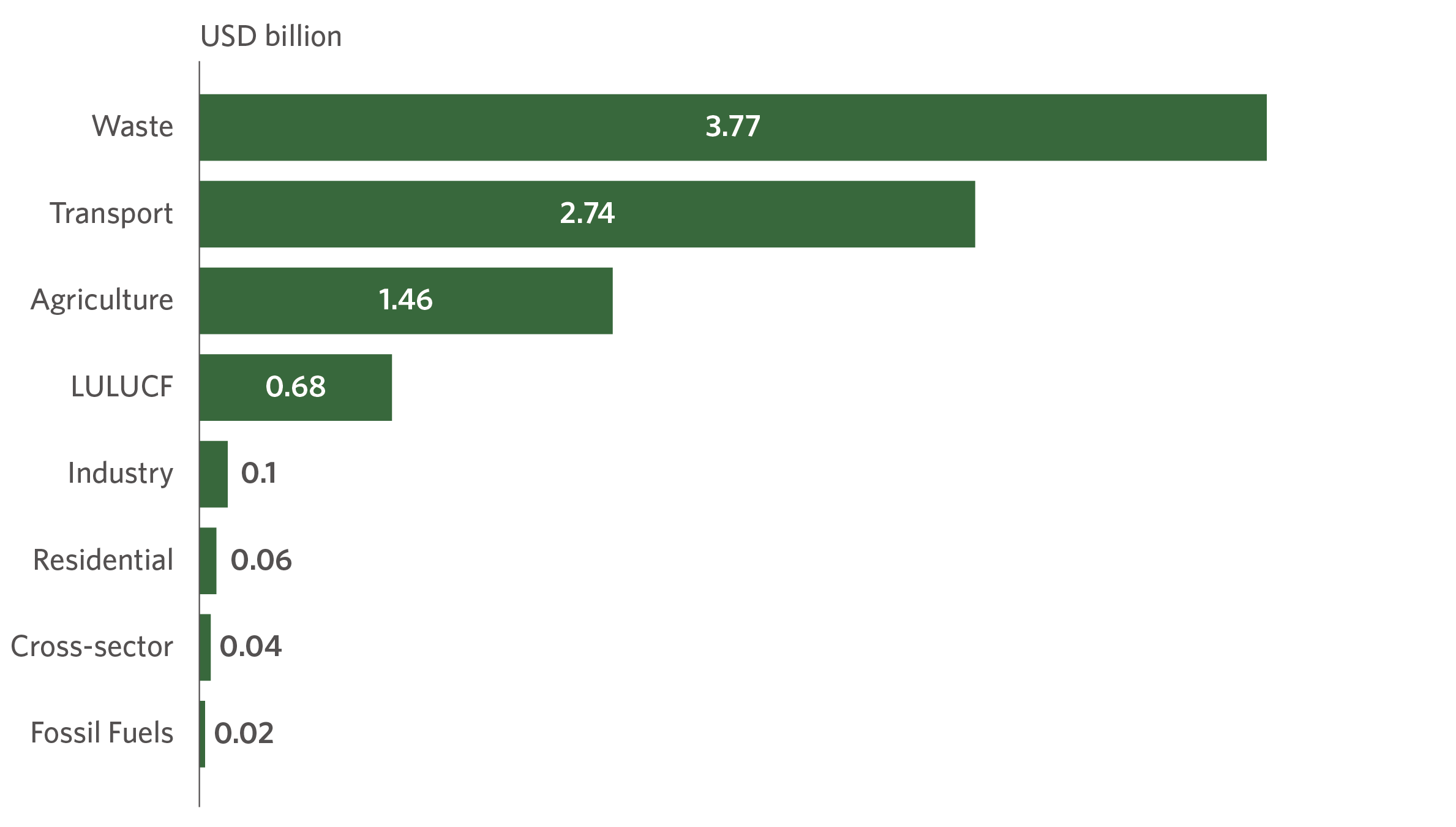
Investment is heavily concentrated in waste management and transportation, which together accounted for 73% of the total finance. The waste sector received 42% of funding, mainly for wastewater treatment and waste-to-energy projects, while transportation claimed 31% largely due to investments in green ammonia and hydrogen production for shipping. By comparison, agriculture and land use, land-use change and forestry (LULUCF) received only 24%, and other sectors, including industrial and energy activities, received a mere 3%.
Sector-Specific Super Pollutant Financing in 2023
Geographic Distribution of Finance
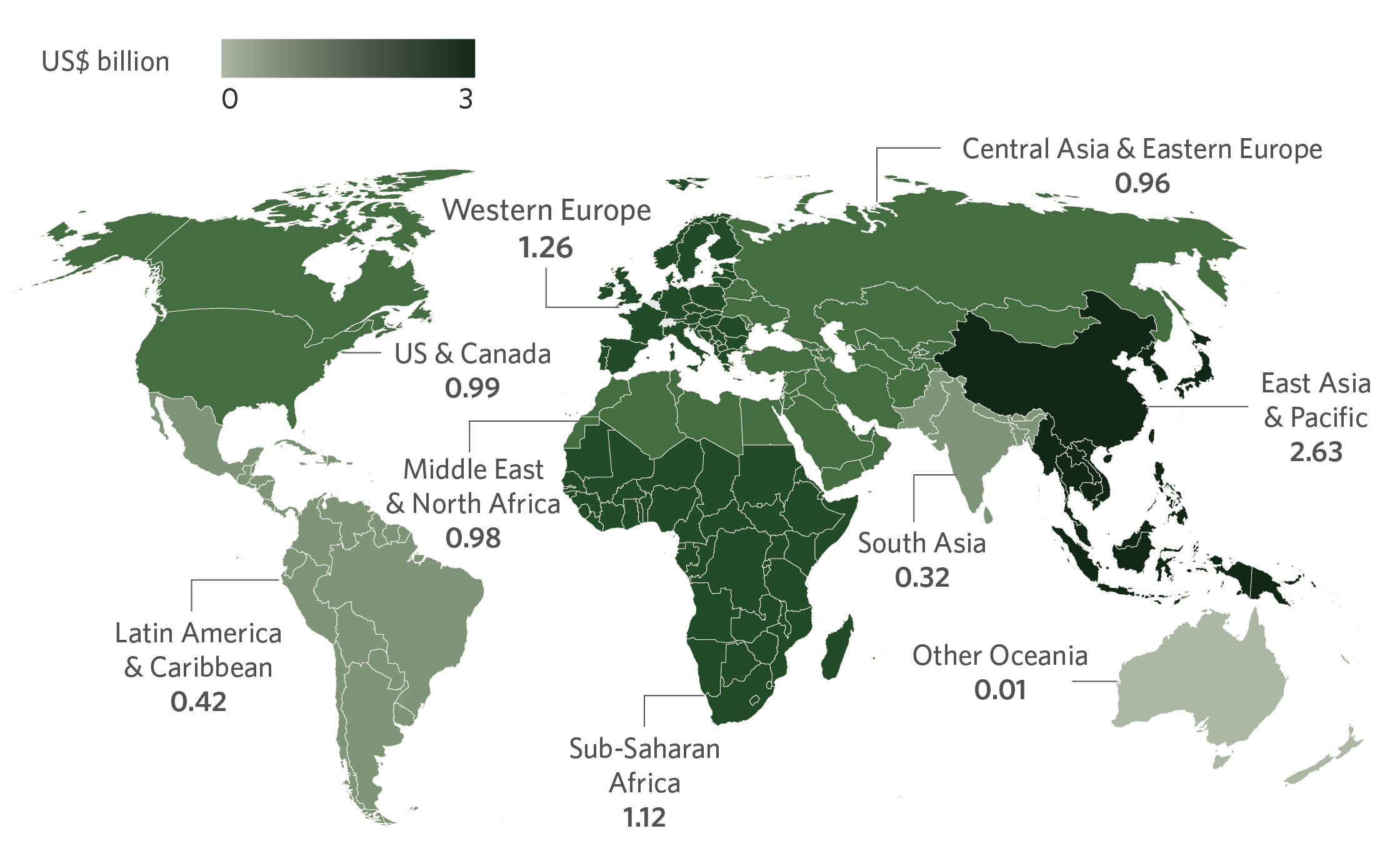
When examining the geographical distribution of these funds, East Asia and the Pacific led with 30% of the total loans, mostly drawing private investments seeking commercial returns. In contrast, Sub-Saharan Africa, which secured 13%, primarily depended on international public finance, predominantly channeled towards waste, sanitation, and agricultural projects. Western Europe followed closely, attracting 14% of funding, reinforcing the trend that developed regions are benefiting more significantly from financial resources compared to developing areas.
Regional Breakdown of Super Pollutant Finance in 2023
The Role of Public and Private Funding
Public finance is critical in supporting developing countries and sectors where a clear revenue model is lacking, accounting for 54% of the funding. In contrast, private finance mainly originates from domestic sources, representing 45% and focusing on projects that have already been deemed bankable.
Emerging Opportunities and Financial Gaps
Despite international initiatives such as the Kigali Amendment and the Global Methane Pledge demonstrating growing political commitment to mitigating super pollutants, financial investment has not kept pace. The findings indicate a substantial disconnect between the established policy directives and the financial flows that are actually mobilized. A UNEP-CCAC assessment highlights the economic potential of investments in climate solutions: every dollar invested could yield up to $15 in economic benefits. Yet, substantial investments are still required—roughly an estimated $500 billion annually by 2030—for implementing effective climate and air quality solutions.
Key Strategies for Closing the Financial Gap
To address the barriers hindering investment in super pollutant reduction efforts, three priority actions are recommended:
- Establish Policy and Data Frameworks: Integrate super pollutants into national climate strategies and require transparent reporting, facilitating investment identification.
- Transform Solutions into Bankable Projects: Package viable technical solutions into formats that attract funding from both governments and private investors.
- Mobilize Appropriate Capital: Leverage public financing and blended finance methods to reduce the risks associated with promising yet uncertain projects.
To explore the financial flows further and access the complete report, you can download the full report here.