Toronto's Molagri has raised $5.8 million to create precision biopesticides that adapt to pest resistance, aiming to revolutionize crop protection systems.
Toronto-based startup Molagri has raised $5.8 million in pre-seed and seed funding to propel the development of a new generation of precision biopesticides. These biopesticides aim to specifically target insect pests while adapting to changes in pest resistance, mitigating two major issues in crop protection: resistance development and unintended harm caused by broad-spectrum pesticides.

According to co-founder Zaky Hassan, "Farmers shouldn’t have to worry about resistance, the same way you don’t think about which flu strain is going around when you get a flu shot." The goal is to design effective solutions proactively, before resistance arises in the field. This funding round was led by Convective Capital, with notable contributions from Superorganism, Y Combinator, Julian Capital, and angel investors including Paul Graham, co-founder of Y Combinator.
Precision Biopesticide Technology
Molagri's groundbreaking platform utilizes engineered non-infectious virus-like particles (VLPs) designed to be ingested by target pests. The surface of these particles is tailored to bind to specific receptors within the insect's gut, allowing the VLPs to enter the cells. Once inside, they deliver genetic instructions (mRNA) that instruct the insect's cellular machinery to produce a toxic substance that results in the pest's death.
Importantly, beneficial insects—such as bees—lack these receptors, meaning they remain unharmed during pest control efforts. The modular design of the VLP platform enables Molagri to adjust both the targeting mechanisms and the toxic payload as pest populations evolve, thus avoiding a complete overhaul for each new challenge. “At a minimum, our payloads will be safe for honeybees, beneficials, and vertebrates, even without the delivery gating by the VLPs,” Hassan stated.
Tailored Approaches to Resistance
The adaptability of Molagri's platform allows for updates in response to evolving pest resistance. Instead of producing a brand-new pesticide each time a pest develops immunity, the company can modify the components responsible for targeting or lethality. For instance, if an insect evolves a mutation that renders an insecticide ineffective, Molagri can potentially replace that component with a new one that works through an alternate mechanism. Conversely, if the pest alters the receptor facilitating entry into its cells, the targeting protein can be redesigned to accommodate these changes.
Moreover, Molagri envisions employing molecular analysis to monitor insect populations, tracking any emerging resistance mutations. This proactive surveillance could help develop alternative solutions before resistance becomes widespread, effectively managing the lifecycle of crop protection products. The company also anticipates the potential to design multiple insecticidal payloads for the same pest, allowing growers to rotate their insecticides and further mitigate the risk of developing resistance.
However, Hassan highlighted a crucial aspect of the business model: the regulatory framework surrounding this technology. If regulators require each updated version of a pesticide to undergo the same extensive registration process as a new product, the rapid adaptability that Molagri seeks could be significantly hampered. To this end, the company aims to navigate a regulatory pathway that would permit modifications to an established platform without necessitating a complete reapproval.
Target Markets
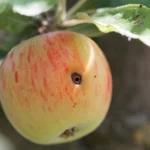
Initially, Molagri's efforts will focus on pests affecting tree nuts and fruits, with prime targets identified as the navel orangeworm—which poses a significant threat to almonds and pistachios—and the codling moth, known for its impact on apples. In the longer term, the company also sees potential in major commodity crops such as corn and canola.
The production of these virus-like particles will primarily be achieved through yeast fermentation. Although the technology is still in its infancy, Molagri has successfully elucidated the molecular structures of relevant insect receptors and is in the process of developing its first VLPs for testing. Progress has also included an initial letter of intent from a grower, although critical factors such as commercial performance, manufacturing costs, formulation stability, and field efficacy await validation.
To facilitate the advancement of their technology, Molagri has moved into an expanded laboratory space in Toronto, equipped for biomanufacturing and tissue culture applications. The recent funding round will help recruit scientists specializing in insect biology, virology, and VLP production, enabling the startup to move closer to practical applications.
The Implications for Agriculture
As Bill Clerico from Convective Capital noted, "Pesticide resistance is a slow-moving disaster for global food security,” emphasizing the urgent need for innovative solutions that fit contemporary agricultural challenges. Molagri's directed approach leverages modern protein engineering, providing farmers with targeted alternatives to traditional broad-spectrum pesticides.
The challenge of managing pest resistance will require a continual reassessment of methods and tools available to growers. The advancements being pursued by Molagri could potentially redefine pest management strategies, making agriculture more sustainable while protecting critical insect populations. Ongoing monitoring of regulatory developments will be essential in determining the feasibility and effectiveness of these adaptable pesticide solutions.
Further reading:
Renaissance Bioscience unveils yeast-derived VLP platform for next-gen RNAi biopesticides
The post Molagri raises $5.8m to build ‘updatable’ biopesticides appeared first on AgFunderNews.