The black-lored waxbill, once thought lost, has been rediscovered in the Democratic Republic of the Congo, raising awareness about wildlife conservation challenges.
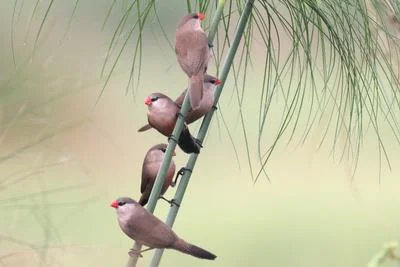
After being lost to science for over 70 years, the black-lored waxbill has resurfaced in the wetlands of the Democratic Republic of the Congo (DRC). This rediscovery brings not only fresh hope for this elusive bird but also underscores the critical need for immediate conservation efforts in the region, where biodiversity faces significant threats.

The black-lored waxbill (Estrilda nigriloris) was initially documented by ornithologist James Chapin in 1927 during an expedition for the American Museum of Natural History. Chapin’s observations, made along the Lualaba River, identified distinct features of the species, including its short bill, gray cheeks, and characteristic black eye patches. However, sightings of this species dwindled after its last confirmed sighting in 1950, leading it to be deemed lost to science.
This year marks a breakthrough. In 2023, biologist Manuel Weber, who was interning at Upemba National Park, spotted the black-lored waxbill once again. Although the initial photographs were unclear, they confirmed the species was still extant. Following this discovery, Weber returned to the area in November, successfully capturing high-quality images that would be the first clear documentation of the species in its natural habitat. These images serve not only as a scientific record but also as a hopeful message in a time when many unique species face extinction.


A black-lored waxbill photographed in November. Manuel Weber / Upemba National Park
The timing of this rediscovery comes shortly after a tragic attack on Upemba National Park in March 2023, where armed militia entered the park, leading to a violent confrontation resulting in the deaths of seven individuals, including park staff. The attack highlighted the ongoing issues of poaching and insecurity plaguing the region. Poaching has historically threatened many species within the park, including the endemic Upemba lechwe, and has destabilized the local ecosystem.

This situation raises serious concerns as U.S. scientists have identified the DRC as a region with an alarming number of 'lost' birds. With pressures from habitat destruction, poaching, and civil unrest, many species are at risk of never being documented again. As conservationists work to protect existing wildlife populations, capturing and documenting elusive species like the black-lored waxbill becomes ever more vital. Such discoveries drive home the point that swift action is necessary to safeguard biodiversity.
The Broader Conservation Context
The rediscovery of the black-lored waxbill serves as a pivotal moment in conservation discussions. The DRC's biodiversity is under constant threat, prompting researchers to increase efforts to document and protect endangered species. Preserving areas like Upemba National Park has become a priority not only for the species that inhabit therein but also for maintaining the ecological balance crucial for the region's health.

As global biodiversity targets pursue reductions in species extinction rates, engagement with local communities, sustainable practices, and resource allocation become essential. Conservation work often requires multidisciplinary approaches that include ecological research, community engagement, and policy advocacy aimed at enhancing protections for vital wildlife habitats.
The case of the black-lored waxbill reflects a broader trend where increased attention to rare and unique species can catalyze changes in conservation strategies—encouraging a focus on not just well-documented animals but on hidden gems that can inspire further investigation and protection efforts.
So, what lies ahead for the black-lored waxbill? Conservationists hope that continued field research will lead to stronger legal protections for Upemba National Park and its inhabitants. The new insights gained from recent sightings are anticipated to inform strategies to mitigate poaching pressures and improve habitat management policies, as local awareness around the importance of the region’s wildlife continues to grow.
In conclusion, the black-lored waxbill's rediscovery underlines a crucial need: for science to remain vigilant and proactive in documenting rare species in vulnerable ecosystems. It’s a reminder that the survival of many of the world’s unique species often hinges on timely research and committed conservation efforts, reflecting the delicate balance between human impact and wildlife resilience.


