Picker AgRobotics is pioneering flexible robotic arms designed for efficient fruit harvesting, significantly improving labor efficiency and crop handling.

In the pursuit of automating fruit harvesting, traditional robotic systems have relied heavily on rigid arms that pick fruit, retract, and place it into a bin. However, Israeli startup Picker AgRobotics offers a novel approach that features hollow, flexible arms resembling elephant trunks. These arms navigate through tree branches, cut the fruit from its stem, and allow it to roll directly into a bin, known as the “Snip-N-Roll” method.
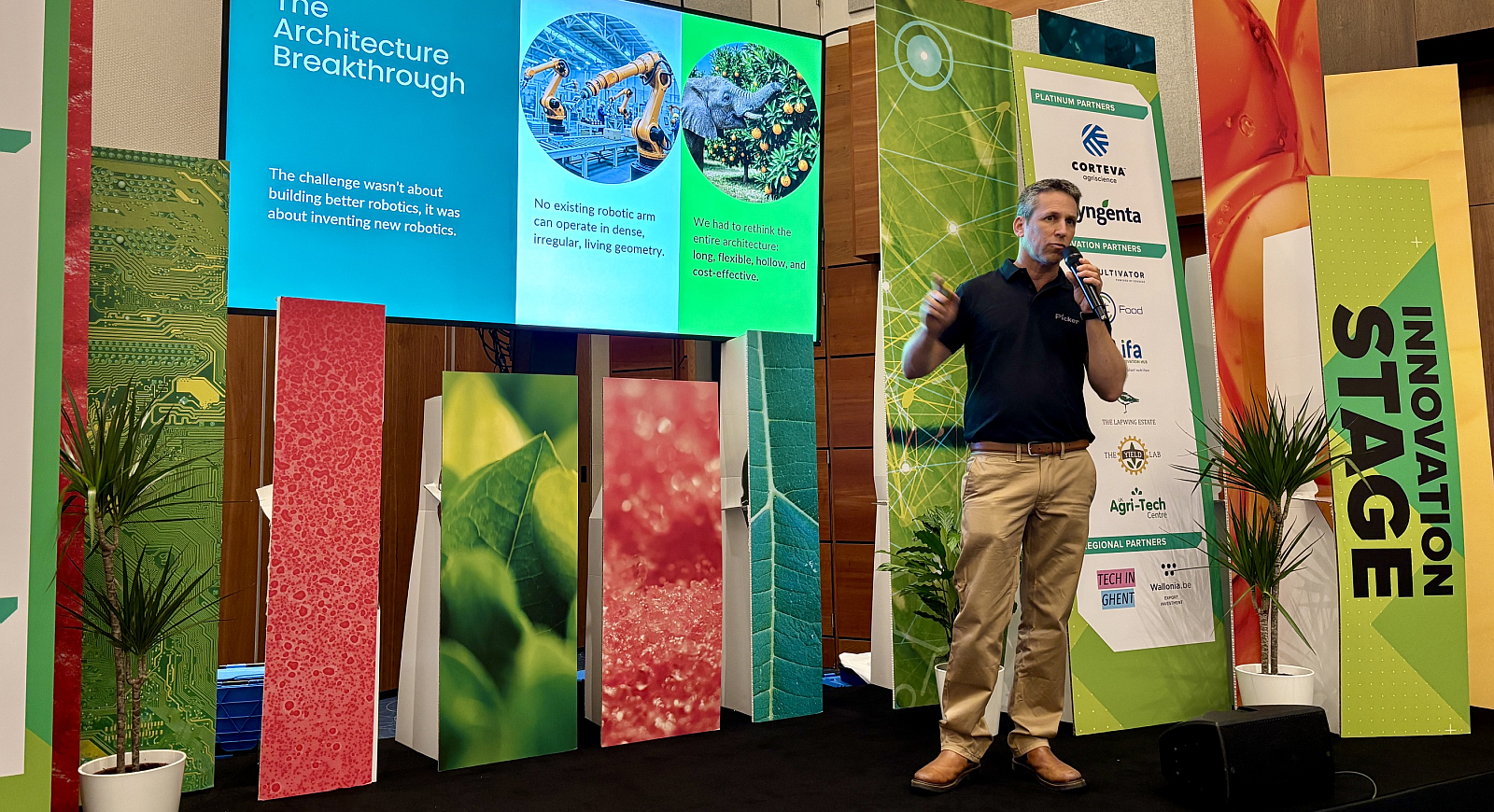
According to CEO and cofounder Yossi Rosenblum, the common pick-and-place method used by many robotic harvesters is expensive and inefficient. “They go all the way into a tree, pick one fruit, then go all the way back, and place it on a conveyor,” Rosenblum explains. This prompted Picker AgRobotics to develop a system that avoids the need for costly machinery by using an innovative and more efficient design.
Addressing the Labor Shortage
At the core of Picker AgRobotics’ mission is tackling the labor shortage in agriculture—a significant and ongoing issue. Robotic harvesters have struggled to fill this gap, often due to their reliance on traditional pick-and-place functionalities. Rosenblum notes, “The labor problem in orchards is extremely severe,” and emphasizes that the need for a more flexible approach has led to their unique solution. Their long, bendable robotic arms are designed specifically to address the challenges posed by harvesting fruit from trees, marking the first instance of such technology being applied in this field.
The Unique Design of Flexible Robotics
While flexible robotics are becoming increasingly common across various industries, they have not yet made significant inroads into agriculture. Rosenblum argues that trees present the perfect challenge for flexible robotics because their limbs can obstruct more rigid designs. With their innovative patent-pending technology, Picker aims to alter the landscape of agricultural robotics.
The company’s harvest mechanism does not involve gripping or pulling the fruit; rather, it approaches the fruit, cuts the stem, and allows the fruit to slide through the hollow arm directly into the farmer’s existing bin. This method preserves the integrity of the fruit while maintaining current orchard setups, as there’s no need for high-density planting or specialized tree trimming.
![Yossi Rosenblum: "There's no gripper. We just approach the fruit, cut the stem, and let the fruit roll through the [hollow] arm." Image credit: Picker Robotics](https://agfundernews.com/wp-content/uploads/2026/10/Screenshot-2026-10-06-094438.png)
Fruits in Focus: Maximizing Potential
Picker AgRobotics initially focused their testing on avocado trees due to their size and complexity, as they represent a challenging environment for harvesting. Rosenblum believes that if their technology can effectively harvest avocados, it can also transition successfully to other fruits, including oranges, lemons, pears, and apples. Rosenblum explains, “If we can do avocados, we can be sure we can do oranges, lemons, pears, and apples,” highlighting the versatility and adaptability of their robotic systems.
The Economic Advantage
A compelling business case underpins Picker AgRobotics’ strategy. From day one, Rosenblum asserts that growers will save money compared to manual harvesting. Their technology promises to harvest fruit at lower costs; for instance, harvesting citrus in the Central Valley of California typically costs about $25 per 900-pound bin, but Picker aims to reduce that cost to $20 per bin. Their lightweight and flexible design contributes to this affordability, as extending the robotic arm by additional meters does not significantly increase costs.
This system also integrates advanced visual technology, allowing growers to evaluate the quality, size, and ripeness of the fruit beforehand. As Rosenblum points out, previously, harvesting has often taken place without understanding the condition of the fruit being picked: “You have no idea what fruit is coming from which tree.” With Picker’s real-time data, farmers can make informed decisions that enhance their operations.
Business Model and Market Strategy
Picker AgRobotics has devised a cautious approach towards introducing their technology to farmers. They plan to initiate their market entry through leasing options, allowing growers to minimize financial risk and test the machinery while observing savings in real-time. According to Rosenblum, “You cannot tell the farmer who doesn’t know anything about this machine: Just put down the money, buy the machine, trust us, it’s going to be okay.” This gradual introduction is designed to build confidence and encourage widespread adoption of their technology.
Initially, Picker will target large-scale growers directly, leveraging existing connections and partnerships within the industry. As they expand, they plan to engage smaller and mid-size farmers through established dealer networks, ensuring a broader distribution of their products.
Current Progress and Future Directions
Picker AgRobotics, founded in February 2025, is relatively new but rapidly progressing. Within just a year and a half, the company has built and tested four robotic units in orchards, continually refining their designs based on performance feedback from these real-world applications. The company plans to begin pilot programs with customers in January 2027, starting with test sites in Israel, followed by expansions to California and Spain.
Implicit in their development timeline is a commitment to sustainability and enhancing agricultural productivity through decreased reliance on human labor and improved technological integration. The success of these pilot programs will provide essential insights, shaping future iterations and potentially driving widespread adoption of flexible robotics in harvesting fruit across the globe.
By focusing on flexibility, efficiency, and real-time data, Picker AgRobotics appears poised to make a meaningful impact on the agricultural sector, pushing the possibilities of automation in fruit harvesting further than previous systems have achieved. As the company moves towards larger-scale implementations, its developments will be closely watched by agriculture stakeholders looking for effective solutions to labor shortages.