This summer’s extreme temperatures have influenced U.S. electricity consumption trends, revealing regional differences and the impact of population growth.
As summer heat envelops the U.S., the interplay between record temperatures and electricity consumption is becoming clearer.
Recent analyses indicate that July 2023 marked the hottest month in recorded history globally, with significant implications for electricity demand in the United States. In regions where temperatures soared, the reliance on air conditioning to mitigate heat has been paramount, stirring questions regarding whether this year’s unusual heat is driving unprecedented electricity consumption levels.
California's Challenge
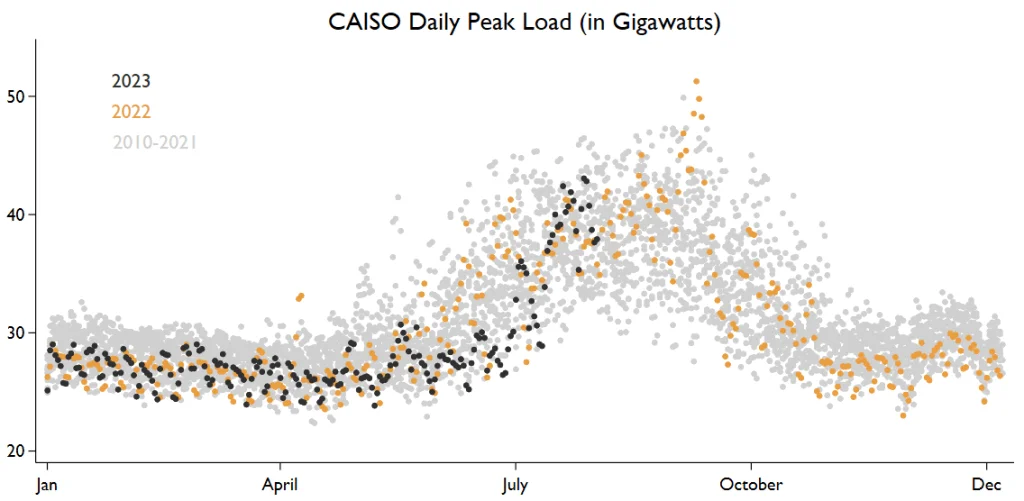
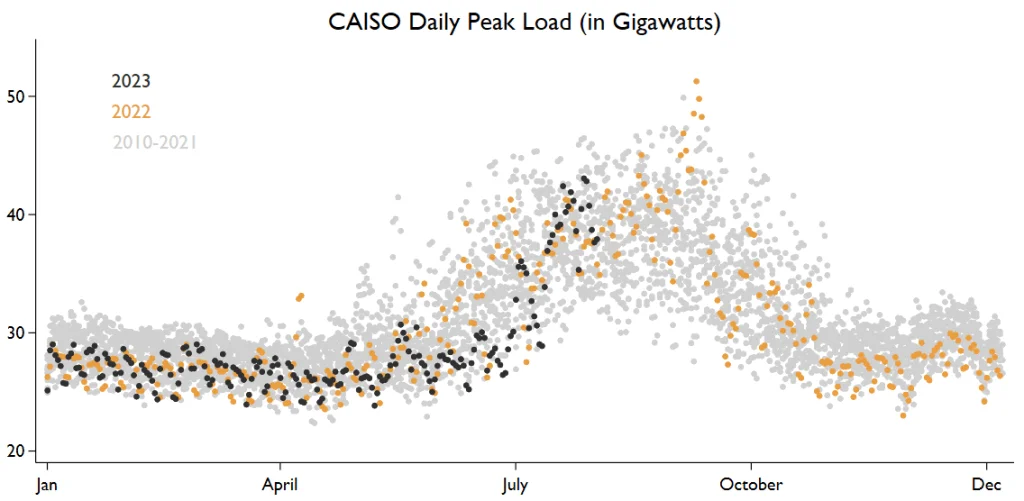
In California, one of the states where extreme weather typically results in high electricity demand, the first half of 2023 does not indicate a record-breaking situation. Daily peak electricity consumption patterns in California from 2023, plotted alongside previous years, show that while demand has been elevated this summer, it has not surpassed the peaks observed in prior years. Notably, California's Independent System Operator (CAISO) recorded an all-time peak of 52 gigawatts (GW) in early September last year, which remains a significant figure as residents brace for potential heat waves in August and September.
Despite higher temperatures reported in parts of the state—some regions exceeding those of previous years—many Californians have managed to keep electricity usage in check. Power outages have been a concern during previous summer months, underscoring the delicate balance between consumption and grid reliability. However, proactive measures, such as public alerts regarding energy conservation, have helped minimize outages during peak demand periods.
A Broader Perspective: Other Markets
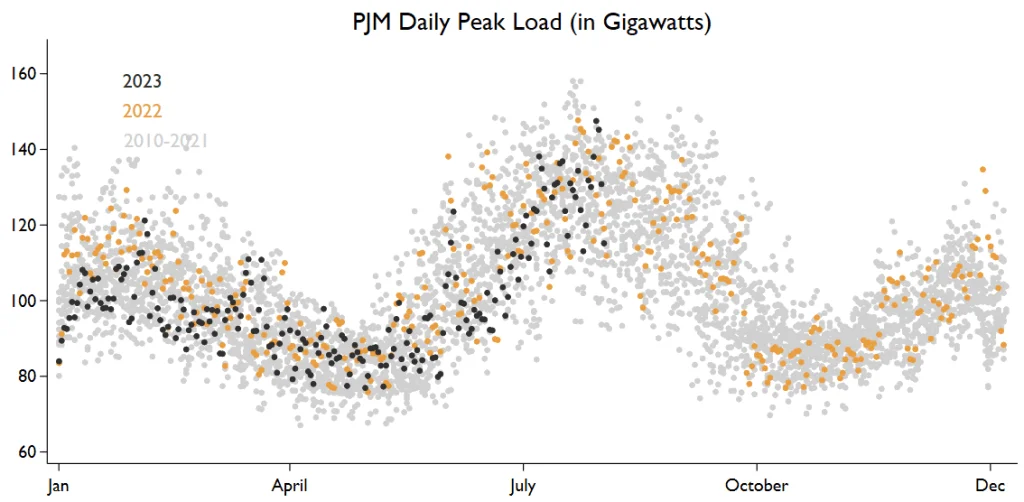
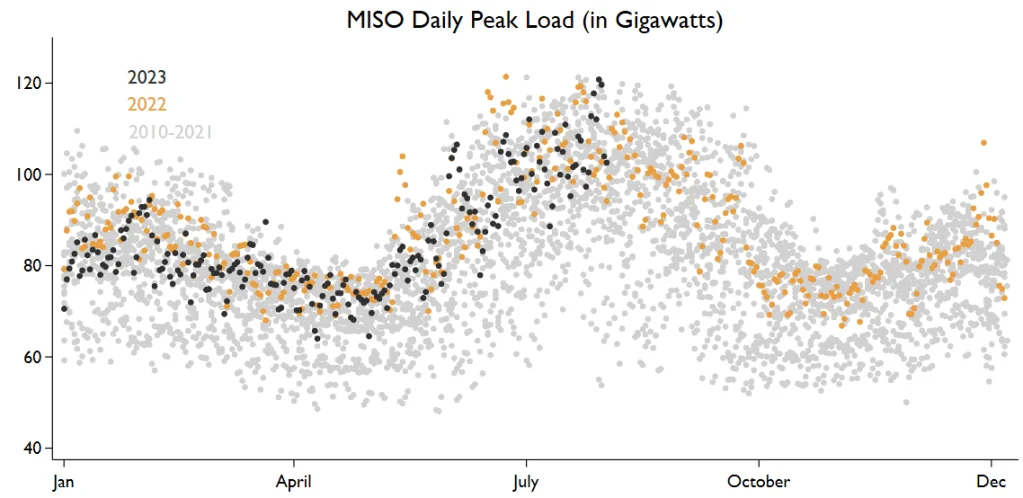
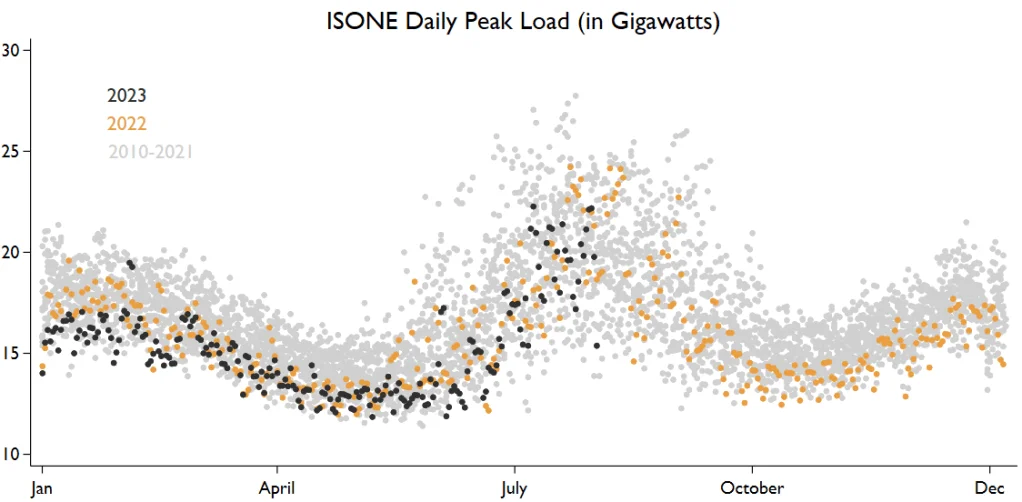
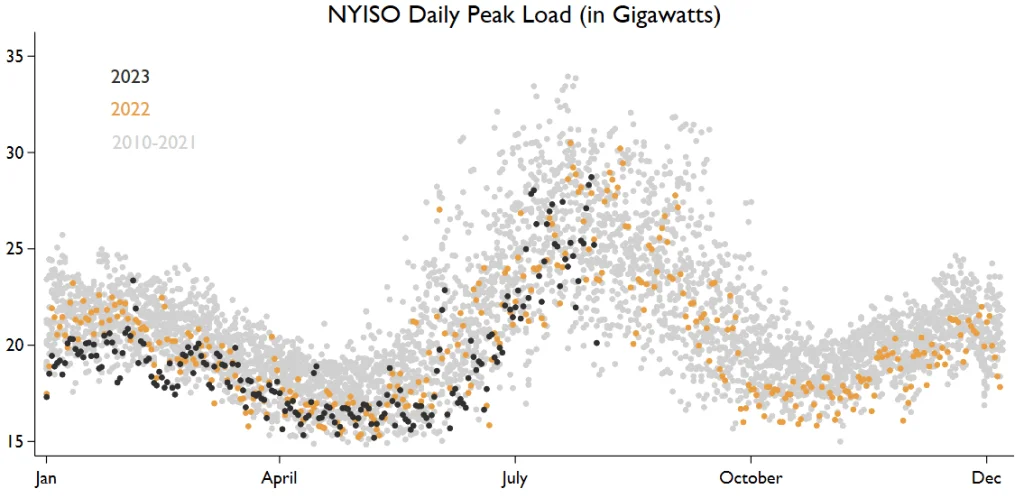
The trends in California are echoed in several other electricity markets across the U.S. Data from various regions—PJM (Pennsylvania-Jersey-Maryland), MISO (Midcontinent Independent System Operator), ISO-NE (Independent System Operator New England), and NYISO (New York Independent System Operator)—reveal that July 2023 has not produced outlier levels of electricity consumption across most of these areas. While some markets have faced bouts of high demand, particularly in mid-July, these levels remain consistent with prior years.
One observation of interest is MISO's situation, where electricity consumption is nearing historical peaks. Recent reports from the North American Electric Reliability Corporation (NERC) raised concerns about reserve margins becoming tighter, indicating potential stress within the electricity system. Nonetheless, MISO's demand fluctuations reflect a long-term trend of increasing consumption, unlike some other markets where demand appears flat or declining.
Texas: The Exception to the Rule
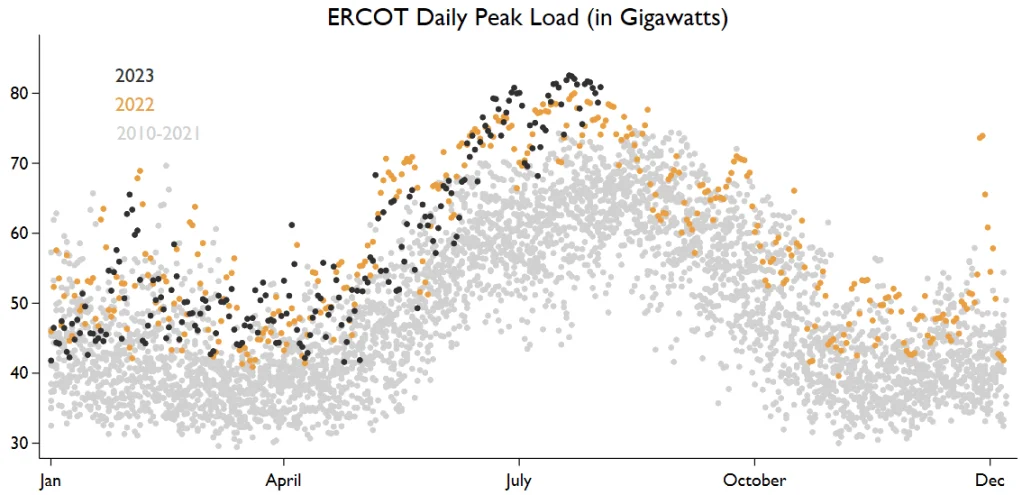
Contrasting sharply with these trends, Texas has witnessed an unprecedented spike in electricity consumption this summer. Known for its vast energy needs, ERCOT (Electric Reliability Council of Texas) has already broken records, exceeding 80 GW in daily peaks on 18 separate occasions in 2023. The state's ongoing heat wave has positioned it as an outlier in the national context, driven by several factors, primarily population growth and new home construction.
From 2010 to 2020, Texas added approximately 1.5 million housing units—more than any other state—fueled by a population increase of 15%. This continuous growth translates directly to rising electricity demand, especially with Texas' unique energy system where electricity accounts for both heating and cooling needs. As the state grapples with summer heat and the accompanying demands on energy infrastructure, the challenges of maintaining reliability become even more pronounced.
Regional Caveats and Future Considerations
While it’s noteworthy that the majority of U.S. electricity markets have not yet experienced record high consumption levels, important regional variables must be considered. States like Arizona, which weren’t included in this specific examination, have reported record electricity usage this summer, driven by similarly extreme heat. Thus, a comprehensive understanding requires a look beyond selected markets.
As summer continues, the prospect of the U.S. facing a significant uptick in electricity demand remains possible. Factors such as system outages, shifting energy generation patterns, and unanticipated climate extremes can challenge grid reliability regardless of consumption levels falling within historic parameters. Careful oversight and real-time assessment from regulatory bodies like NERC remain critical in anticipating impacts on the grid and mitigating risks to consumers.
While record temperatures put pressure on energy systems, the majority of U.S. regions currently appear to be managing their electricity demands effectively. However, with August and September still ahead, a close watch on consumption trends and grid reliability will be vital as extreme weather conditions persist.
For ongoing updates on energy trends, stay connected with research and insights from specialized energy institutes.


