A recent study claims that new gas stations in Mexico lead to lower prices and improved service quality, emphasizing the benefits of market competition.
A recent working paper from the Energy Institute reveals that competition among gas stations can lead to lower prices and improved service quality.
Gasoline prices are notably variable across locations, as evidenced by price ranges in various US cities—New York sees prices from $2.99 to $4.99, while Chicago’s range is $2.79 to $4.99, and Los Angeles shows a wider spread from $3.95 to $6.35. This disparity raises questions about the factors driving gas prices, particularly the influence of competition in different markets.
Understanding Gas Prices Through Competition
The underlying premise of the Energy Institute's study is simple: increased competition in local markets generally leads to lower prices. This study particularly focused on the Mexican gasoline market from 2017 to 2022, utilizing a unique dataset that records the operations of every gas station in the country. The dataset allowed the researchers, including Shaun McRae and Enrique Seira, to analyze the impact of over 1,000 new gas station entrants on prices and service quality.
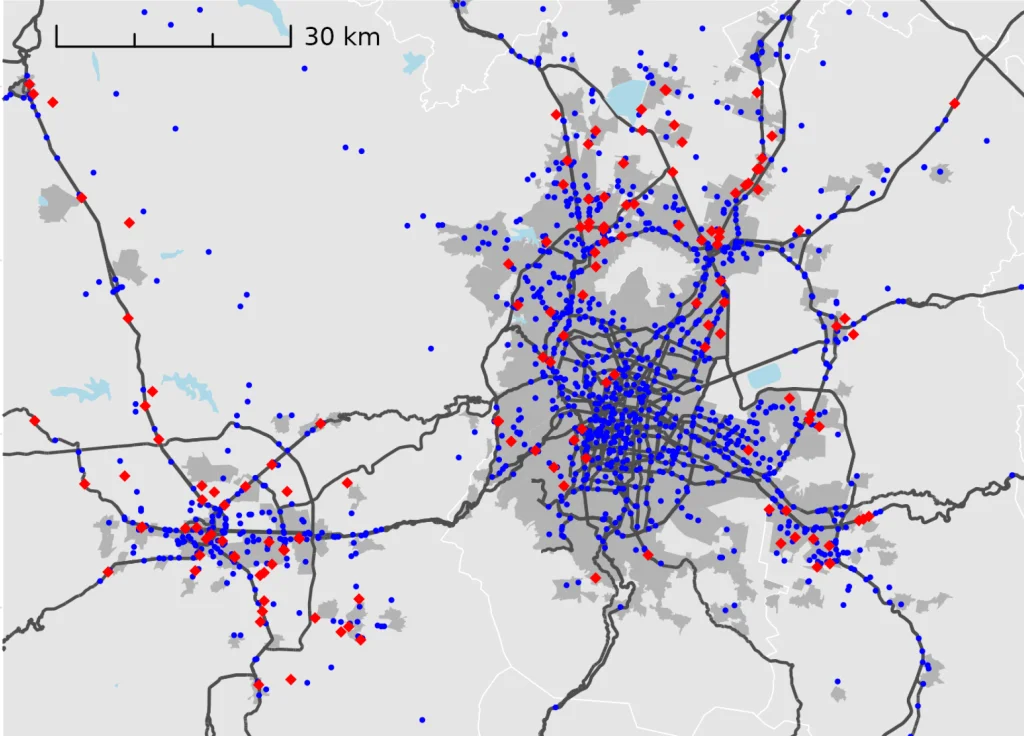
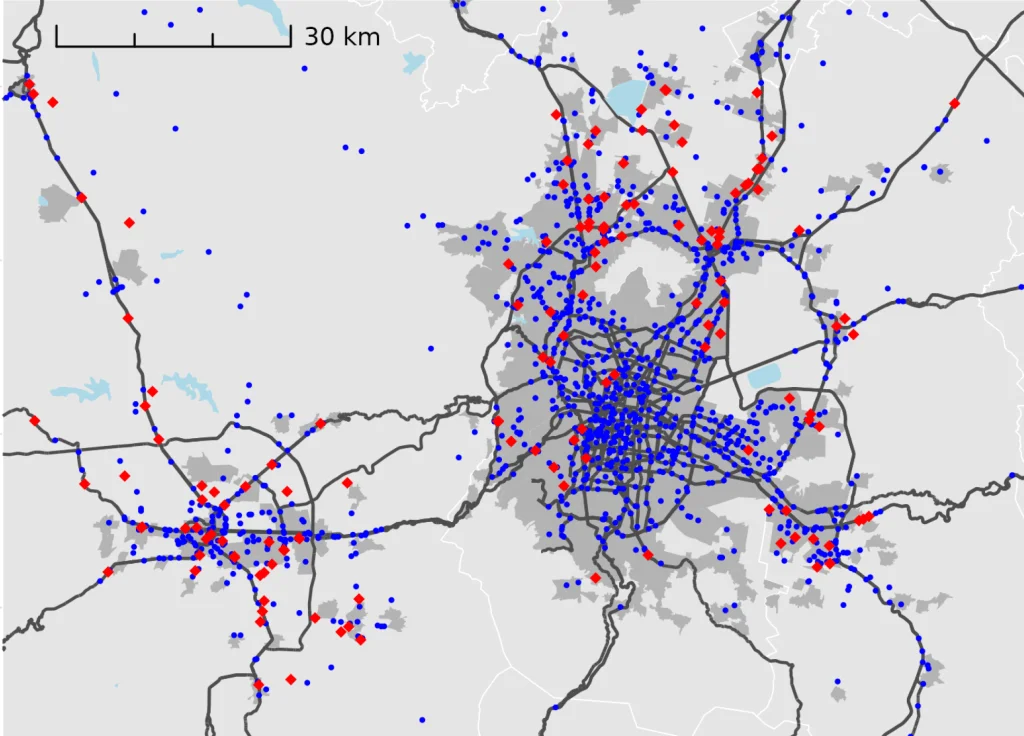
In 2017, Mexico had approximately 11,645 gas stations, classified as incumbents. The introduction of 1,072 new entrants provided a natural mechanism for assessing how competition affects pricing and service. With entrants targeting locations previously without stations, the study effectively isolated the competitive effects of these new players.
Impact of New Entrants on Prices
Using price data for regular gasoline, premium gasoline, and diesel, the researchers tracked price fluctuations before and after new stations opened nearby. They matched stations to a road network and identified competitors within a three-minute drive to delineate local markets.
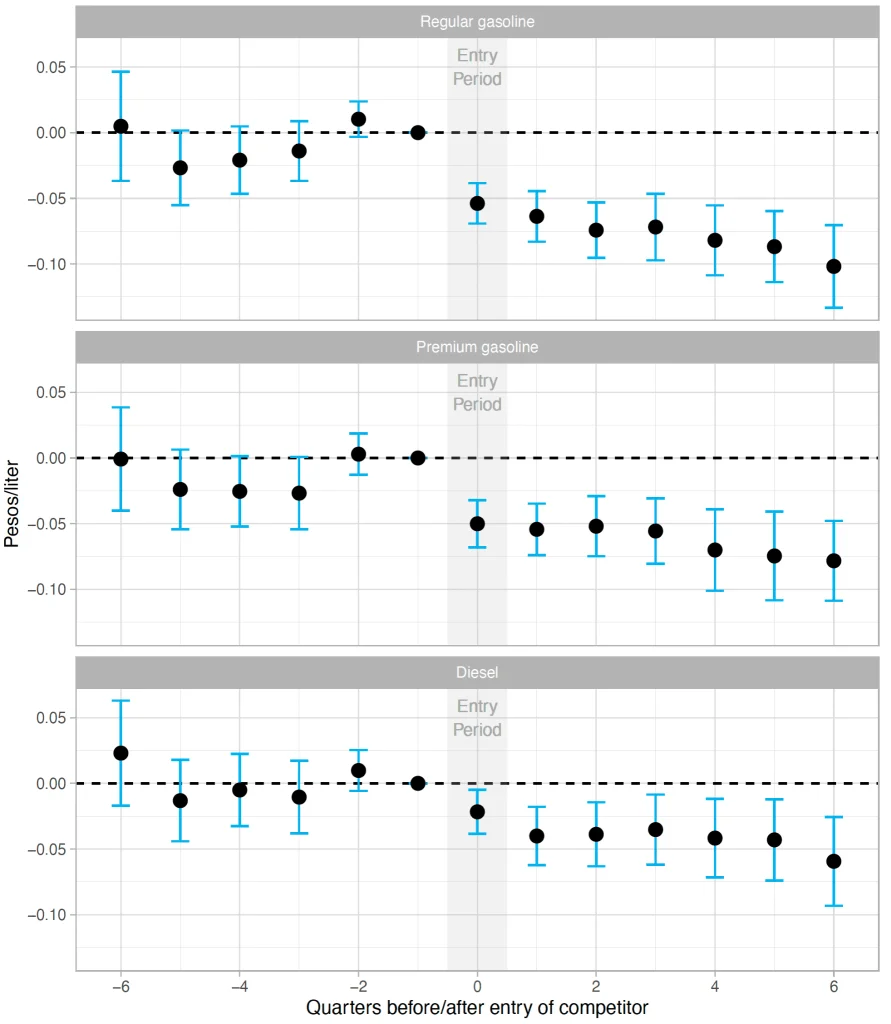
The results were telling. Following the entry of new competitors, there was a noticeable decline in retail gasoline prices across all three fuel types. For regular gasoline, prices dropped by 0.05 pesos per liter in the quarter immediately following the entry of a competitor. Over time, this effect continued, although the overall decline was under 1%, translating to roughly a 6% reduction in retail margins for gasoline stations.
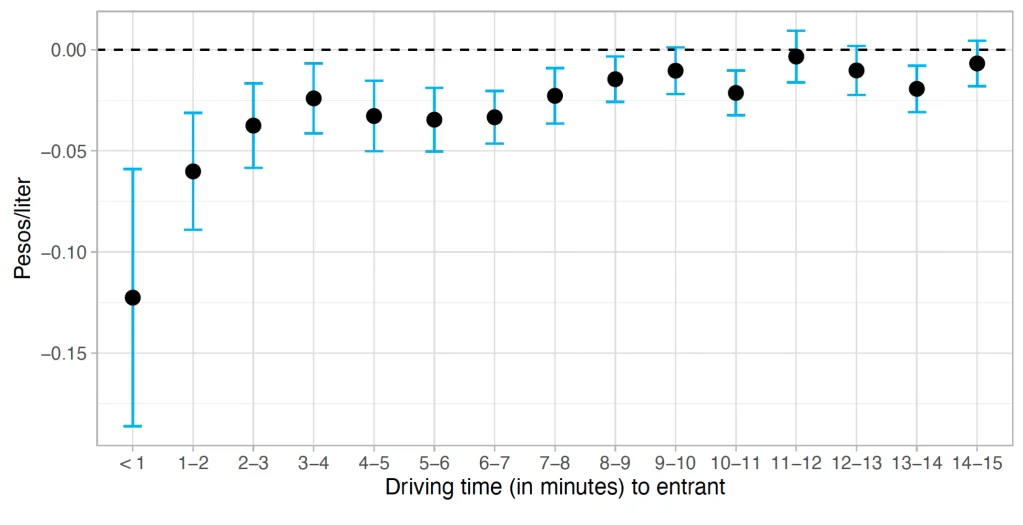
What’s particularly interesting is the correlation between price reduction and the proximity of entrants. The analysis showed that when new stations opened within one to two minutes of existing stations, the price drop for regular gasoline was more pronounced at 0.12 pesos per liter. As driving time increased, the impact on prices gradually diminished, becoming negligible beyond a nine-minute drive.
Market Monopolies and their Effects
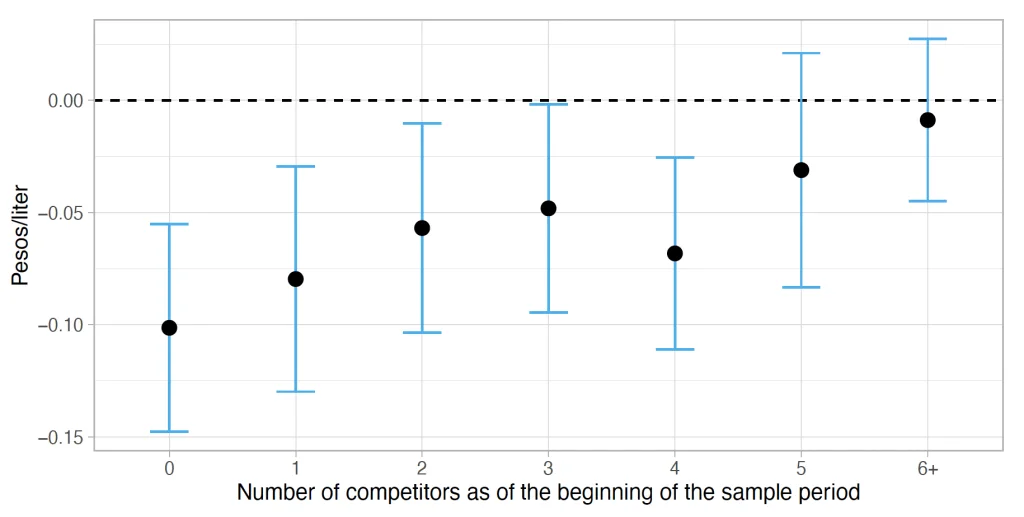
The research also examined how initial market structures influenced price reductions. Incumbent stations with no competitors saw a price decrease of 0.10 pesos per liter upon the entry of a new competitor. This effect lessened with existing competition; a station in a duopoly scenario (one existing competitor) experienced about a 20% reduction in price impact, and the effect continued to diminish in markets with more pre-existing competitors.
Service Quality Beyond Price
Gasoline quality is virtually uniform, yet the facilities at stations can vary significantly. The study also explored how competition affected service quality, an aspect often overlooked in economic literature due to measurement challenges. Utilizing data from over 26,000 bathroom inspections conducted by Mexico's consumer protection agency, the authors evaluated cleanliness and availability of essential amenities across various stations.
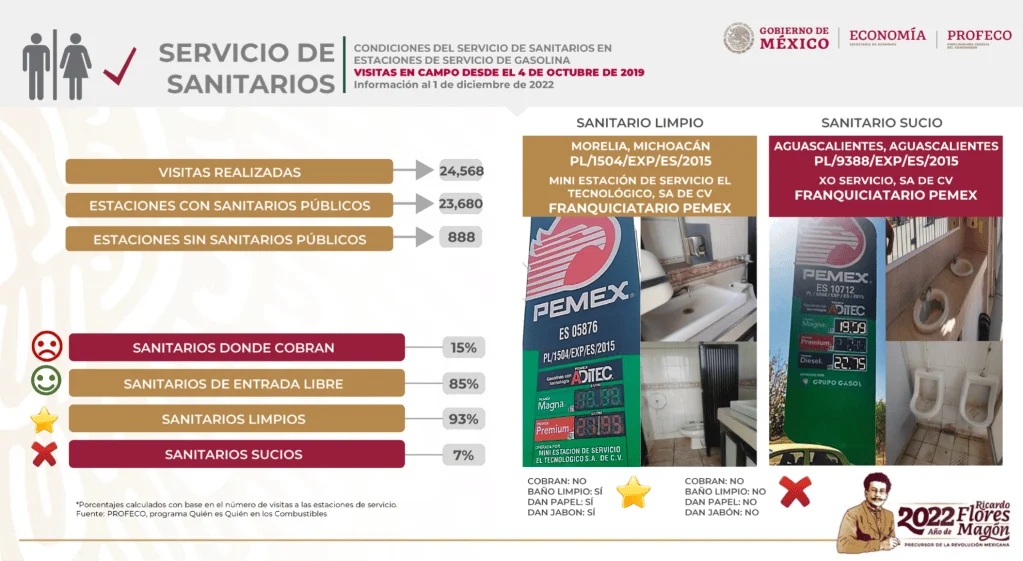
The findings indicated that service quality tends to improve when new competitors enter the market. Although the results were less statistically robust than pricing data, they suggested a trend where stations enhance their service in response to competitive pressures.
Implications for Policy and Consumer Experience
This research has significant implications for ongoing policy discussions in Mexico, particularly in light of recent changes to the gasoline market aimed at fostering competition. The findings underscore how vital market dynamics are for consumer outcomes—suggesting that additional competition could further enhance pricing and service quality.
Moreover, these insights extend beyond the Mexican context. They emphasize the critical role of competition among small businesses, like gas stations, in shaping consumer experiences and maintaining fair pricing. As household consumption increasingly occurs at localized businesses, understanding the market structures that influence competition becomes essential.
The study helps illuminate patterns that could be relevant for other regions grappling with similar issues in gasoline pricing dynamics. For instance, California has ongoing concerns regarding its "Mystery Gasoline Surcharge," and this research could inform strategies around competition and pricing transparency.
In conclusion, increased competition in the gas station sector not only leads to lower prices but also enhances service quality. This dual benefit of competition is crucial for policymakers and stakeholders as they work to cultivate a more equitable marketplace for consumers.
For further details, see the complete study: Davis, Lucas, McRae, Shaun, and Seira, Enrique. “Competitive Effects of Entry in Gasoline Markets,” Energy Institute Working Paper, December 2023.


