Thousands of newly digitized weather records from the Congo reveal significant warming trends and highlight the urgent need for more climate data in the region.
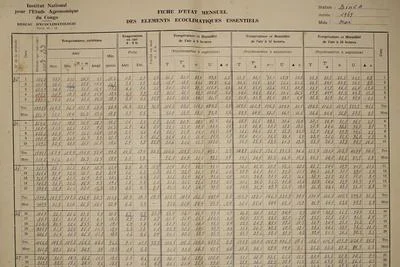
The Congo Basin has historically lacked comprehensive climate data, especially regarding long-term changes in heat and precipitation. This gap in information has led to challenges in understanding climate trends in one of the world's most climate-sensitive regions. However, a recent initiative to digitize thousands of handwritten weather records is beginning to illuminate the climate changes occurring in this area.

The weather records, covering a timeline from 1908 to 2023, were meticulously collected from archives located in both Belgium and the Democratic Republic of the Congo (DRC). Scientists undertook the challenging task of scanning over 9,000 pages, which contained upwards of a million individual observations. This data rescue effort is particularly significant considering that many of these fragile records are at risk of being lost to deterioration or disasters.
“Visiting the archive in the DRC was a stark reminder of the fragility of this information,” noted Derrick Muheki, a PhD candidate from Vrije Universiteit Brussel. “Only months before my arrival, part of the archive was damaged by fire, potentially destroying decades of irreplaceable data.” Such incidents underscore the critical need for similar data preservation efforts globally.

Through the digitization efforts, researchers uncovered a clear warming trend in the Congo Basin, particularly notable during the latter half of the 20th century. Analysis between 1961 and 1990 indicated that the average daily temperature in the Congo increased by approximately 0.9 degrees Fahrenheit, while the average number of hot days each year nearly doubled. This increase in temperature has been associated with a rise in both extreme heat events and heavy rainfall.
These findings, published in the journal Earth System Dynamics, highlight that the changes in the Congo Basin are consistent with trends observed in Europe and North America. The difference, however, is that in regions like the Congo, the absence of historical climate data has stymied researchers' understanding of these shifts over extended periods. Consequently, the newly digitized records provide essential context for both historical and future climate change assessments.

By combining this newly digitized data with previously saved datasets, researchers have constructed one of the largest climate data compilations for the Congo Basin. This comprehensive aggregation not only offers a more detailed view of historical weather patterns but is anticipated to enhance future climate change projections. “This work emphasizes how vital it is to prioritize similar data rescue projects, particularly in areas sparse in weather records, to better understand climate dynamics,” said Wim Thiery, a professor at Vrije Universiteit Brussel involved in the research. “Regions in the Global South, which are already facing severe climate impacts, particularly require this attention.”
The ongoing scarcity of weather data remains a pressing issue, particularly in Africa, where a lack of weather stations hampers the ability to issue timely warnings about extreme weather events. This deficiency also complicates efforts to analyze the role climate change might play in affecting weather patterns post-event. For communities reliant on accurate weather forecasts—agricultural producers, for instance—this lack of data carries significant risks for livelihoods and food security.
The Importance of Data Rescue
As climate change continues to escalate, the implications of not documenting and understanding its effects can be dire, especially in regions like the Congo that are highly vulnerable. Efforts like the digitization of historical weather records not only serve immediate research needs but also contribute to long-term resilience against climatic shifts. Access to reliable data empowers communities and policymakers to build strategies that are responsive to observable weather patterns and climate predictions.
Looking forward, it's essential that additional resources are allocated toward climate data collection and preservation, particularly in developing nations where such efforts can yield transformative benefits. Ensuring this information is available will not only close existing knowledge gaps but also foster informed decision-making processes that can adapt to the changing climate landscape.
This recent initiative in the Congo serves as a model for similar projects in data-sparse regions worldwide. Scientists and policymakers must recognize the value of leveraging historical data to inform future developments and investments, not only within environmental science but across socio-economic facets, enhancing community preparedness and adaptive capacities in the face of a warming planet.
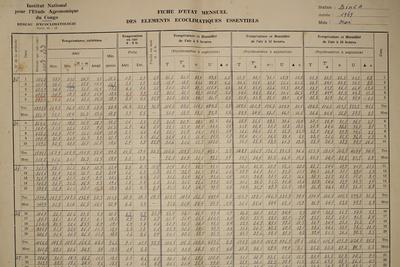
A weather record kept in the National Institute for Agronomic Studies and Research in the Democratic Republic of the Congo.Derrick Muheki


