Recent findings suggest that thinning, rather than clearcutting, may better support mountain ash trees and preserve biodiversity in Victoria, Australia.
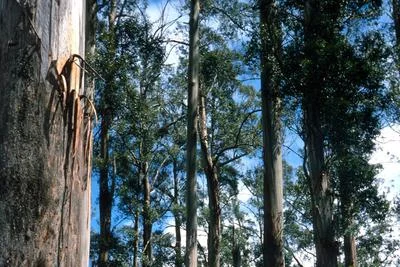
A long-term study of mountain ash trees in Victoria, Australia, has shifted the conversation around forest management and clearcutting practices. Initially launched in the 1980s to support arguments for clearcutting, the research took an unexpected turn when scientists revisited the sites years later, prompting new insights into forest regeneration and conservation.
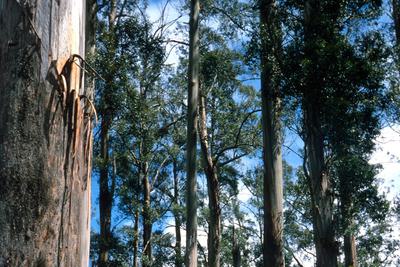
Mountain ash trees, some of the tallest eucalyptus species, can exceed 300 feet in height and live for over 400 years. Historically, foresters advocated clearcutting as a means to manage these forests, arguing that the trees are well-adapted to survive intense bushfires that often decimate forest areas. They pointed to the observed uniformity in age among stands of trees as evidence that the forest could regenerate effectively following such disturbances.
In 1987, researchers commenced a landmark experiment in Victoria’s Central Highlands to investigate these claims further. The study involved analyzing the effects of large clearcuts (over 1,000 feet wide), small clearcuts (less than 200 feet), and heavily thinned plots where at least half of the trees were removed. The early findings, published in the early 2000s, indicated that large clearcuts most positively impacted the regrowth of mountain ash, lending weight to the foresters' position.

However, this narrative evolved dramatically when scientists returned to the experimental sites in 2014 and made a surprising observation. In the thinned plots—designated for selective logging—mountain ash trees were not only surviving but thriving. Measurements revealed that the trees in these areas were, on average, 20 percent larger in diameter compared to those in untouched forest zones. Moreover, the carbon storage capability of the trees in thinned plots matched or exceeded that of trees in unharvested areas, indicating a significant recovery of lost biomass due to selective logging.
The implications of these findings are noteworthy. According to the study authors, the larger trees in thinned plots enhance resilience to fire and provide critical habitats for species such as the greater glider and Leadbeater’s possum, both reliant on mature tree hollows. This approach to thinning appears to support timber production while also prioritizing the preservation of essential woodland ecosystems and their associated carbon stores.

Rethinking Forest Management Strategies
The recent research has drawn parallels with findings from North American conifer forests, where similar patterns have emerged. The authors emphasize that strategies promoting sustainable forestry can be reconciled with the need for conservation. “Our findings for mountain ash indicate that it’s possible to find common ground between conservation goals and timber production,” they noted in their published statement in The Conversation.
This new understanding challenges the long-standing dichotomy of conservation versus production that has dominated forestry debates. By embracing thinning over clearcutting, forest managers could maintain the ecological integrity of woodlands while also meeting timber demands. This approach not only benefits wildlife habitats but also contributes positively to carbon sequestration efforts, a critical factor in combating climate change.

Practical Impacts on Forest Communities
The implications of this shift extend beyond environmental considerations. For local communities that rely on timber for their livelihoods, adopting sustainable practices like selective thinning can offer a pathway to economic resilience. The forestry sector could enhance community support by aligning forest management with conservation objectives, promoting broader societal benefits.
Furthermore, as climate projections suggest increased frequency and intensity of bushfires in many regions, adopting more resilient forestry practices becomes essential. Thinning might not only reduce fire risk by managing undergrowth but also facilitate the growth of healthier, robust trees capable of withstand future climate pressures.
The outcome of this research exemplifies how revisiting established practices can lead to better environmental stewardship and more sustainable economic outcomes. As forest management strategies evolve, the role of science in guiding these changes will be increasingly critical. Stakeholders must engage in open discussions about the balance of environmental conservation and production needs, paving the way for the future of forestry management in a changing climate.
In conclusion, the findings regarding mountain ash regeneration serve as a reminder that nuanced approaches can reconcile diverse interests in forest ecology. As the community grapples with these evolving dynamics, the lessons learned from this study may shape the next generation of forest management practices in Australia and beyond.


