The MEP 2040 initiative sheds light on the critical role of mechanical, electrical, and plumbing systems in building carbon emissions, promoting significant collaborative efforts for decarbonization.

Published on: September 29, 2026


For over a decade, the focus on building carbon and decarbonization efforts largely revolved around structures and enclosures. While advancements in these areas marked significant progress, they also revealed a critical oversight: the embodied carbon tied to building systems. These mechanical, electrical, and plumbing (MEP) systems can constitute a considerable portion of a building's total life cycle carbon emissions. However, the industry has historically lacked the necessary data and benchmarks to quantify and reduce these emissions effectively.

The MEP 2040 initiative was launched to address these gaps. It aims not only to generate new data but also to foster a spirit of collaboration across firms to measure embodied carbon consistently, share insights, establish benchmarks, and learn together. This collaborative approach is essential for building the knowledge base needed to accelerate the decarbonization of building systems.

MEP 2040 depends on a collective commitment to action and transparency. Recently, findings from the Whole Life Carbon Pilot Findings + Gap Analysis were released, marking a key milestone in the industry’s understanding of MEP systems' carbon footprints. Recognizing the contributions of the practitioners involved, the initiative represents an essential step toward translating ambition into real, actionable strategies for carbon reduction.

MEP 2040 Whole Life Carbon Pilot Findings + Gap Analysis
Launched in February 2025, the Whole Life Carbon Pilot aimed to bridge the gap in project-specific MEP quantity takeoffs and embodied carbon assessments. In its recent report, MEP 2040 revealed that the embodied carbon of MEP systems is comparable to traditional structural, enclosure, and interior (SEI) impacts, positioning them as equally critical to any comprehensive building decarbonization strategy. In several projects where operational carbon and refrigerant emissions were included, MEP systems sometimes had an even larger carbon impact than SEI components.

This report acts as an early dataset, revealing not only the carbon ramifications of mechanical, electrical, plumbing, and related systems but also emphasizing significant variability in operational and refrigerant emissions. The analysis indicated substantial B4 replacement impacts throughout the building's lifecycle and highlighted critical elements such as mechanical equipment, piping, ductwork, electrical apparatus, and renewable systems like photovoltaic and geothermal technologies.

The report clearly indicates that without addressing these carbon emissions from MEP systems, the broader goal of building decarbonization remains at risk. It also underscores the necessity for further collaboration within the architecture, engineering, and construction (AEC) industry to close gaps in data, reporting practices, and industry benchmarks.

The dedicated members of the MEP 2040 Data Analysis and Reporting Working Group played a vital role in producing this report, representing various signatory firms that contributed their time, expertise, and experience.

What’s Next for the CARE Tool
The CARE Tool has emerged as a pivotal resource, allowing users to estimate and compare the embodied, operating, and avoided carbon impacts of reusing and upgrading existing buildings versus new constructions. This winter, significant updates to the tool will be introduced, enabling dynamic comparisons between multiple reuse and new construction scenarios at the building level, allowing users to save and share their work.

Additionally, the upcoming release will feature CARE for Portfolios, which expands this functionality from individual buildings to entire portfolios. This will help owners and planners strategically assess and compare emissions reductions across their holdings, further enhancing decision-making regarding building reuse.

Architecture 2030 at COP31
Antalya, Türkiye will host COP31 this November, where Architecture 2030 will continue to advocate for the built environment in global climate dialogues. Each year, a specific theme is selected relevant to the needs of the sector; past themes have revolved around sufficiency, circularity, and the reuse of existing infrastructures. This year, the focus expands to encompass infrastructure as a crucial element of climate discussions.

Notably, it’s projected that three-quarters of the infrastructure expected to exist by 2050 has yet to be constructed, with materials like cement, iron, and steel currently contributing 7.3% to global annual CO2 emissions. Unlike operating emissions that can decrease over time, embodied emissions remain fixed once construction concludes. The urgency to eliminate CO2 emissions from infrastructure by 2040 is essential for achieving the 1.5°C climate target. The side event's objectives will include advocating for essential industry commitments and developing aligned measurement and certification systems to achieve these goals.

Latest Articles and Resources
Architecture 2030 invites readers to explore recent insights and articles from its network of experts, enhancing understanding and inspiration in addressing the built environment’s carbon footprint.

Upcoming Tools and Resources
Project LCA Baseline Guidance: ECHO Aligned Guidance for Adoption
The ECHO Project has introduced a pilot guidance for conducting comparative life cycle assessments (LCA), aiming for consistency in how embodied carbon programs and policies operate. This guidance addresses establishing functional equivalency between baseline and proposed projects, and it lays the groundwork for measuring embodied carbon accurately across different project types, including buildings, sites, and infrastructure.

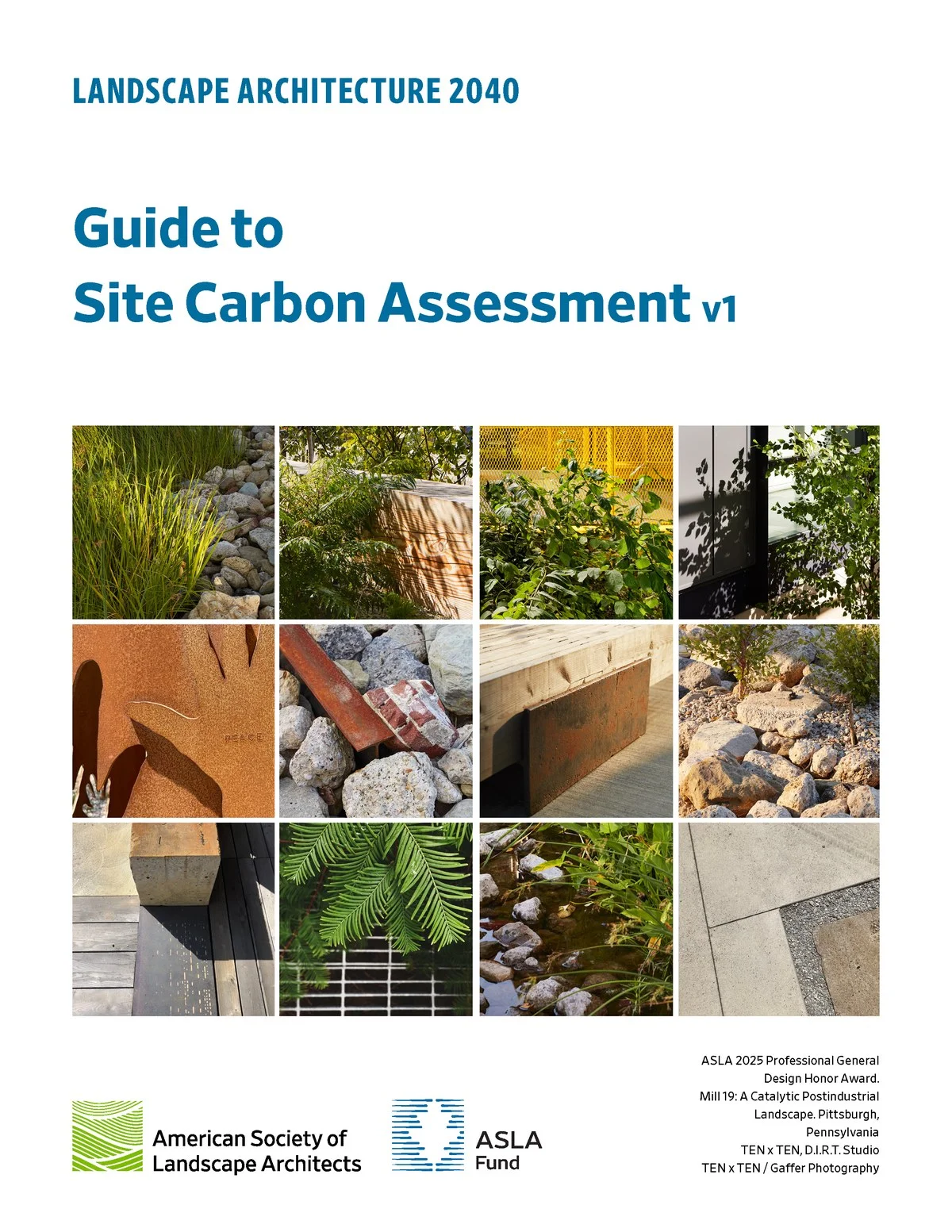
Landscape Architecture 2040: Guide to Site Carbon Assessment
The American Society of Landscape Architects has released the first comprehensive methodology for assessing the embodied, operational, and stored carbon of site projects. This guide introduces a new life cycle phase concerning landscape carbon storage and aims to unify the landscape architects' efforts with adjacent fields in carbon assessment.
Natural Infrastructure: Mini-Field Guide 001
The American Planning Association and its Sustainable Communities Division aim to reshape planning practices towards more sustainable communities with their Mini-Field Guide series. The first installment addresses natural infrastructure strategies that can help mitigate flooding and extreme heat while providing climate and public health benefits.
Oregon DEQ Low-Embodied Carbon Housing Program
Oregon's DEQ is allocating $25.6 million for the construction of 940 new housing units to adhere to lower embodied carbon standards, pairing sustainability with affordability.
New York State Executive Order 22: Life Cycle Assessment Pilot Methodology
New York has begun a pilot life cycle assessment methodology aimed at reducing embodied carbon in state construction projects, influencing how future construction will be evaluated and regulated.
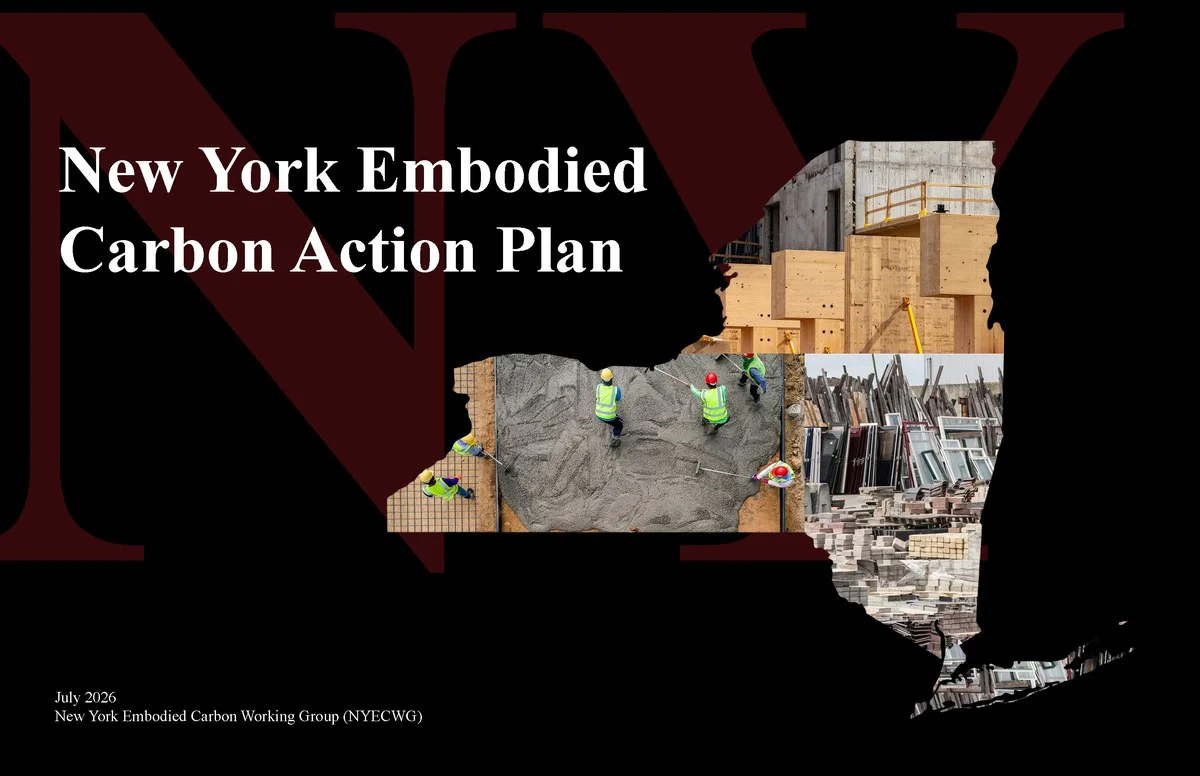
New York Embodied Carbon Action Plan
A collaboration of over 35 experts has unveiled a roadmap for reducing emissions linked to construction materials, proposing concrete measures ranging from statutory targets to compliance pathways in the building code.
Take part in shaping the future by engaging with these initiatives that promise significant impacts on the built environment and carbon emissions.


