German startup Orbem has introduced its MRI-based in-ovo sexing technology in the U.S., enabling significant advancements in poultry hatcheries.

The German startup Orbem has begun its operations in the U.S. with the deployment of its first MRI-based in-ovo sexing systems. A second facility is expected to become operational by mid-August, and a third project is planned for 2027. While the company has not publicly disclosed the names of the hatcheries involved in these installations, anticipation is building for an upcoming announcement from a major retail partner, according to Jennifer Volz, head of global business development. This signifies a substantial step forward in poultry welfare and efficiency.
The Need for In-Ovo Sexing Technology
In-ovo sexing technologies serve a critical function in poultry management by determining the sex of embryos before they hatch. This capability allows hatcheries to eliminate male layer eggs earlier in the incubation process, which traditionally required 21 days before male chicks are culled post-hatching. Male chick culling is currently prohibited in Germany and France, with similar regulations becoming effective in Italy next year, reflecting a broader movement toward animal welfare.
Norway, Switzerland, and the Netherlands are also working to phase out male chick culling, with industry initiatives often fostering these changes rather than strict government mandates.
Commercial Approaches to In-Ovo Sexing
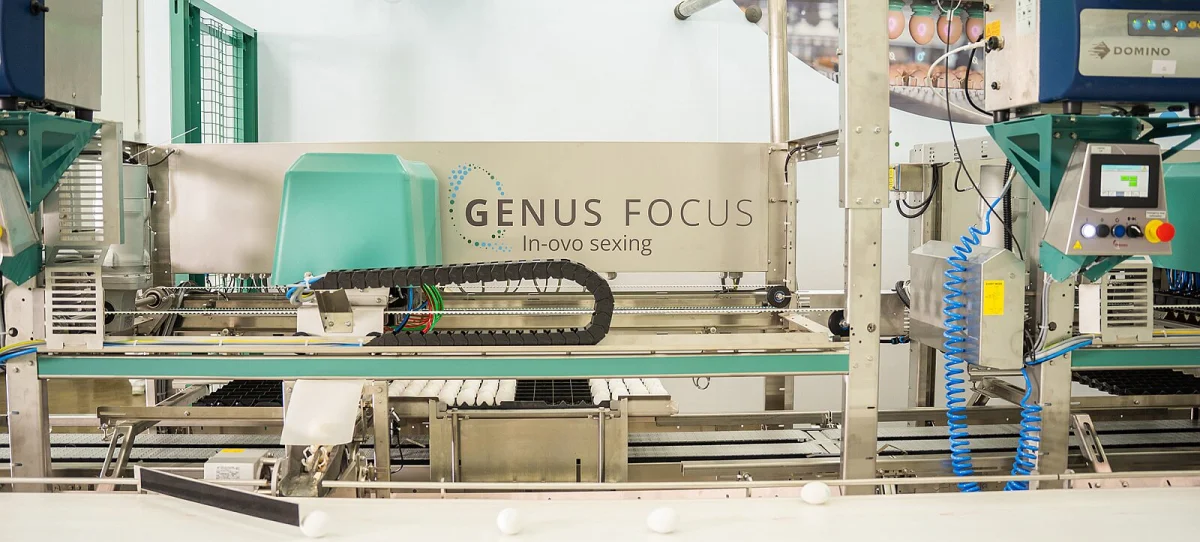
Orbem’s system utilizes a non-invasive method called the “Genus Focus” system that combines magnetic resonance imaging (MRI) with artificial intelligence (AI) to inspect eggs and detect the reproductive organs of the developing embryo. The differentiation of these organs begins around day six, although the AI algorithms currently operate most effectively on days 11 and 12. Orbem claims the capability to acquire and analyze images in less than a second with 99.5% accuracy, standing in contrast to traditional MRI procedures that are slower and more costly, requiring skilled operators.
This technology is adaptable for various hatchery sizes, ranging from smaller operations producing about one million females a year to larger facilities capable of processing up to 24,000 eggs per hour. Other notable in-ovo sexing technologies include:

- The CHEGGY system by AAT, which employs hyperspectral imaging to identify feather coloration differences between male and female embryos. However, its applicability is limited to specific genetics, making it less suitable for broader markets.
- The approach by HatchTech Group, which involves sampling allantoic fluid to obtain DNA for sex determination. Although the method is automated, it still requires manual intervention and has limitations regarding the integrity of the eggs.
Currently, all three methods can achieve accuracies beyond 99%, significantly reducing the number of male chicks allowed to hatch and enhancing animal welfare.
Drivers Behind Adoption
Orbem’s technology is already making waves in several European nations, including France, Germany, Switzerland, and the Netherlands. In Switzerland, a collaboration between hatcheries, retailers, and welfare organizations has facilitated a proactive transition towards in-ovo sexing. In Norway, the competitive market incentivized hatcheries to adopt advanced technologies rapidly. The Netherlands presents a more complicated landscape, with retailers hesitant to absorb the additional costs associated with in-ovo sexing, which increases egg prices by approximately one cent.
The dynamics are similar in other countries, such as Sweden and Denmark, which seem poised to follow Norway's lead with possible discussions underway in the UK, although progress remains slow.
At the European level, Volz predicts a future of collaborative activity, but highlights the challenge of establishing regulations that do not unduly affect lower-income member states or hamper competitiveness for European exporters.

A Cost-Effective Model for Hatcheries
Orbem employs a unique pay-per-use business model instead of selling MRI units. This system allows hatcheries to access the technology without heavy upfront capital expenditures while enabling Orbem to cover installation and maintenance costs. Nonetheless, hatcheries may need to adapt their facilities to accommodate equipment upgrades.
The introduction of in-ovo sexing technology typically adds a moderate cost to retail egg prices; some consumers are willing to absorb these costs, although mainstream acceptance is still in question. Despite the initial resistance to higher consumer prices in the U.S. market, Volz remains optimistic about Orbem's potential for growth.
Installing in-ovo sexing systems at just a handful of hatcheries could significantly impact national egg production, given the market's concentrated nature. A full transition of the U.S. laying flock to in-ovo sexing could take approximately two years, gradually increasing the proportion of eggs produced without the culling of male chicks.
While the potential for savings through fewer manual sexing requirements exists, it is not sufficient to solely justify the investment in in-ovo technologies. Additionally, Orbem’s Genus Scale technology can help hatcheries optimize incubator capacity by identifying non-fertilized eggs, although it does not directly influence the cost-benefit analysis of in-ovo sexing.
Broader Applications of MRI Technology
Looking forward, Orbem aims to expand its non-invasive imaging technology into the fresh produce market, applying its “Genus Echo” tech for grading and quality control in crops like watermelons. Launched with the firm JimboFresh in Spain, this technology will detect internal defects without needing to slice the fruit open, thereby reducing waste associated with overproduction and inaccurate sampling.
The distinction in drivers between animal welfare-focused projects and fresh produce initiatives is clear but encouraging for the future of non-invasive technology in various sectors.
Financial Outlook and Market Penetration
Orbem announced earlier this year that it is already profitable, having raised €55.5 million ($65 million) in a Series B funding round earlier this year, following an earlier Series A round. Although confident in its current MRI technology, Orbem recognizes the possibility of emerging alternatives in in-ovo sexing that could change industry dynamics, such as volatile analysis and genetic markers detectable before incubation.
Currently, in-ovo sexing is utilized in approximately 40% of the commercial layer hen population within the EU, with significant progress noted in implementing these practices over recent years. According to the market penetration report by Innovate Animal Ag, over 281 million female chicks have been identified using in-ovo techniques since 2021, illustrating the rapid acceptance and growth of this technology across the industry.
In summary, the momentum behind in-ovo sexing technologies represents not only a significant shift in egg production practices but also a substantial step toward enhanced animal welfare in the poultry sector.


