Israeli ag robotics startup Nanovel is developing autonomous citrus harvesters to reduce labor costs and improve operational predictability for growers.
As agricultural technology advances, challenges remain in specific sectors, such as citrus harvesting. While robots excel in tasks like crop spraying and weed control with high precision, extracting oranges from dense foliage poses a significant hurdle, according to Nanovel, an Israeli ag robotics startup. Established in 2018, Nanovel specializes in creating solutions for these complex harvesting scenarios.
The Complexity of Citrus Harvesting
Citrus trees present unique challenges. The fruit is often deeply nestled within thick branches, making it difficult for traditional harvesting methods to reach them. An autonomous harvester must navigate a three-dimensional landscape, distinguishing between fruit, leaves, and branches—all while ensuring the fruit remains undamaged.
Nanovel’s Technology and Innovations
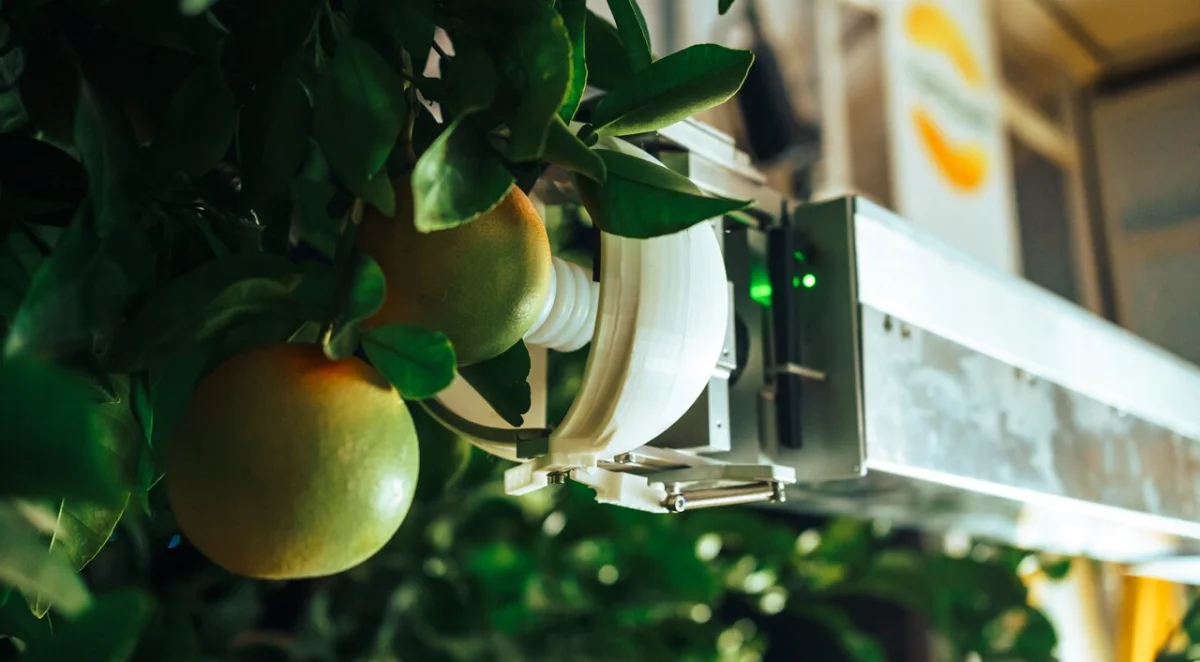
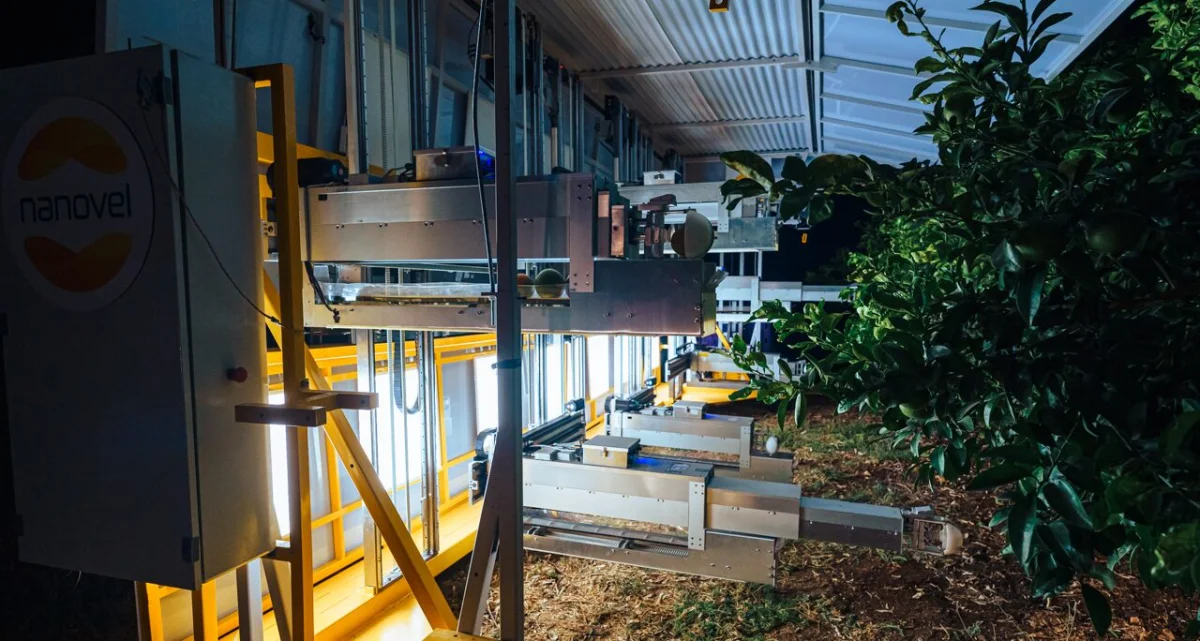
To tackle these challenges, Nanovel has developed a patented autonomous harvesting system equipped with robotic arms capable of reaching up to 1.5 meters into the canopy. Using a combination of a vacuum gripper and precise cutting technology, the harvester cuts stems within 2mm of the fruit before transferring it into bins. This design involves six telescopic arms that work in unison, managed by an onboard computer that employs computer vision and artificial intelligence to map the canopy and efficiently allocate tasks among the arms.
While the current iteration can identify fruit based on color and size, the technology isn't yet equipped to detect defective fruit. Following successful trials with a prototype in California, which involved a tractor-pulled version of the harvester, Nanovel is on track to develop a fully self-driving model, planning tests with top growers in southern Europe by 2027 and aiming for commercial deployment by 2029.
Economic Implications for Growers
The financial context of citrus harvesting is compelling. Labor costs can constitute up to 50% of total production expenses, making automated systems increasingly attractive. Isaac Mazor, CEO of Nanovel, points out that while automated technology may seem expensive, it offers significant savings. For instance, harvesting oranges manually costs approximately $42–$43 per a 900-lb field bin, while Nanovel's technology could reduce that cost to between $25 and $30.
Furthermore, the unpredictability of seasonal labor, where growers often face challenges in securing enough workers, adds to the appeal of autonomous systems. Robotic harvesters can work for extended hours and quickly resume operations after interruptions like bad weather. Mazor emphasizes that quality is paramount in fruit harvesting, which further drives the need for reliable technology capable of meeting market standards.
Enhancing Workforce Efficiency
While robots won't completely eliminate the need for human operators, they can significantly enhance productivity. Mazor asserts that the ideal scenario involves robots harvesting about 70-80% of the fruit, with human workers attending to the more difficult-to-reach parts. The goal is to increase one operator's productivity three to four times through supportive robotic technology.
The optimal working model envisions fleets of 10-20 robots, each accompanied by an operator who manages fruit collection and addresses any obstructions. This hands-on approach is designed for ease of training, requiring less than a day for operators to familiarize themselves with the technology.
Future Revenue Streams and Market Strategy
Long-term, Nanovel seeks to create additional revenue from data collected during harvesting, potentially generating valuable orchard maps that could aid in optimizing other agricultural practices, such as irrigation and chemical application. This data-driven approach could enhance overall crop management.
In terms of sales strategy, Nanovel plans to market its robotic harvesters directly to large citrus growers. Currently estimated at about $400,000 per machine, the expectation is that growers can recoup their investment within five years due to enhanced efficiency. As labor costs in key agricultural regions continue to climb, the financial attractiveness of such technologies is expected to increase.
Geographical Focus and Expansion Plans
Initially, Nanovel is focusing on the citrus market, specifically oranges and lemons, which Mazor identifies as a $1.5 billion opportunity in targeted regions. After establishing a stronghold in these fruit varieties, the company may expand into harvesting technologies for other tree fruits like clementines and avocados.
With a particular focus on areas in the U.S. and southern Europe, Nanovel is exploring inquiries from countries such as Argentina, Chile, Peru, and Brazil, where labor conditions similarly warrant automation.
Continuous Improvement and Competitive Landscape
Mazor acknowledges the importance of ongoing development, pointing out that the recent trial in California served as both a learning experience and a pivotal validation of their technology. Despite the competition, including attempts by Vision Robotics, no company has yet successfully commercialized a fully autonomous citrus harvester.
The path to profitability remains a cautious yet optimistic endeavor for Nanovel, which has managed to reach its current phase with under $10 million in funding, in stark contrast to the higher funding needs of some competitors. The recent €2.5 million grant from the European Innovation Council, combined with potential future equity offerings, aims to facilitate growth toward financial sustainability.
Conclusion
As Nanovel looks to the future, the integration of robotics in citrus harvesting underscores a larger trend in agricultural technology. With labor challenges and economic pressures mounting, the development of efficient and autonomous harvesting solutions could play a critical role in shaping the agricultural landscape."


