In ovo sexing has achieved 40% market penetration in the EU, yet its adoption in the US market faces significant economic and consumer awareness hurdles.

In ovo sexing technology, designed to end the practice of male chick culling by determining the sex of embryos before hatching, has successfully penetrated 40% of the market in the European Union over just five years. This method is gaining traction in various countries where regulations against chick culling are more pervasive. However, the United States market presents distinct challenges that could hinder similar adoption rates, particularly in the absence of legislative pressures.
Typically, the processes in hatcheries begin with incubating eggs for about 21 days. Upon hatching, trained professionals assess the newly hatched chicks to determine their sex. Unfortunately, male chicks—infertile for egg production and uneconomical for raising as meat—face culling through methods such as suffocation or grinding. This method is not only ethically questionable but also an inefficient business model, leading to immense waste in an industry already focused on optimizing production.
Despite the clear ethical issues surrounding the culling of male chicks, the implementation of in ovo sexing technology is burdened by economic considerations. The current costs associated with in ovo sex detection outweigh the benefits of increased efficiency in hatchery operations. As a result, stakeholders throughout the supply chain, from hatcheries to producers, are hesitant to adopt this technology unless it can demonstrate economic viability.
Food inflation currently affects consumer behaviors, making it challenging for egg producers to justify additional costs—especially when most of the consumer base remains unaware of the culling practices behind their egg products. United Egg Producers (UEP), which controls 90% of the US egg production, has expressed support for in ovo technology, but indicates that widespread implementation remains contingent on its economic and operational feasibility.

Rapid European Adoption and Premium Segment Interest Elsewhere
The rapid uptake of in ovo sexing in the EU has been substantially supported by regulatory initiatives. Notable countries have enacted bans or planned phase-outs of male chick culling, including Germany and France, while Austria is implementing new restrictions, and Italy aims to end the practice by 2027. At the broader EU level, plans are in motion to propose revised welfare rules that target ending the systematic killing of male chicks altogether.
Countries such as Switzerland and Norway have seen impressive adoption rates, with in ovo sexing covering over 85% of the layer flock in Switzerland and 52% in Norway. Interestingly, these markets, while lacking formal prohibitions on male chick culling, illustrate that the technology can thrive under voluntary adoption motivated by consumer demands for ethical practices.
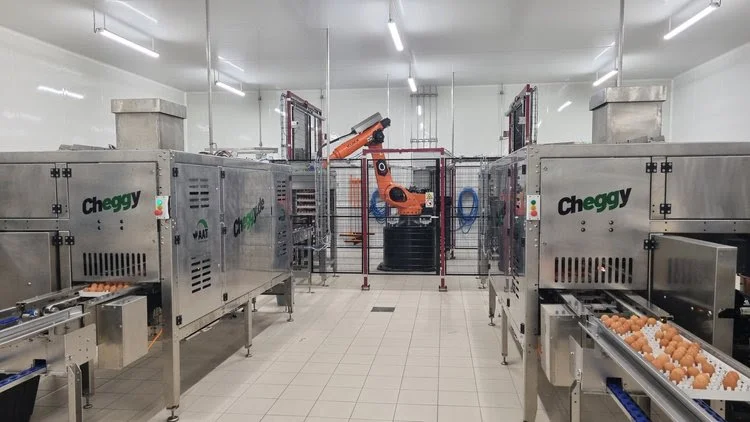
Brazil and Australia are also witnessing growth in the technology's adoption. A collaboration involving that country's hatchery systems and German company AAT has brought the in ovo technology into Brazilian hatcheries, while Australia's Specialized Breeders Australia incorporated a Cheggy machine to begin implementing this technology.

In the US, early adopters include brands like NestFresh, Vital Farms, Kipster, and Sauder’s Eggs, which manage about 4% of the layer flock. These companies are transitioning to in ovo sexing as their flocks reach retirement, installing systems from manufacturers like Orbem, AAT/Cheggy, and Seleggt.
Barriers to Adoption in the US Market
Despite the significant advancements in Europe, the consensus is that the commodity egg market in the US will not transition to in ovo sexing until the technology becomes cost-competitive with traditional manual sexing practices. Robert Yaman of Innovate Animal Ag admits that costs have decreased since the technology's introduction, yet it still needs to reach parity with manual methods for widespread adoption.
Emerging innovations may also play a crucial role in accelerating adoption. For instance, collaborations such as the one between CSIRO in Australia and Hendrix Genetics are exploring gene-editing techniques that could potentially identify male embryos right at the point of lay, thus circumventing the need for later incubation.
Consumer awareness of male chick culling is poised to grow alongside the visibility of in ovo technology through labeling on premium products, which can highlight companies’ ethical commitments. Additionally, trends in agentic shopping show potential; when consumers enable AI agents to seek out ethical brands, it can simplify the decision-making process while benefitting companies that adopt humane practices.
Yaman explains, "Five years ago, this was a germ of an idea in a handful of hatcheries. Today, it’s standard across over a third of Europe." This rapid shift may soon inspire change in US markets as awareness builds.
Assessing the Techniques Behind In Ovo Sexing
In considering the options available for in ovo sex determination, the technologies can be categorized into five distinct methods, most of which are still in various stages of development. Current commercially available techniques include:

- Non-Invasive Imaging: This technique uses methods such as hyperspectral imaging to observe physical characteristics of the embryos, but is typically restricted to brown eggs. Major players include:
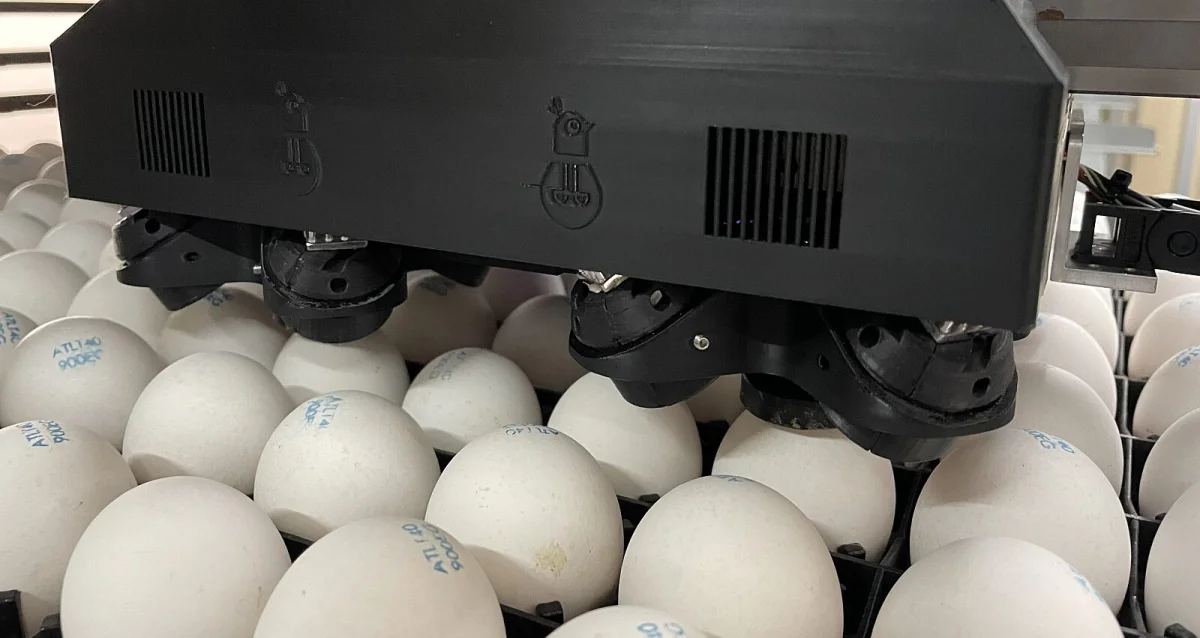
- AAT/Cheggy, which examines feather color on day 11-13.
- Canadian Egg Technologies, which targets sex determination as early as day four with a global commercial launch expected in late 2026 or early 2027.
- Orbem, which utilizes a mix of AI and MRI technology.
- Omegga, which monitors embryonic development inside incubators on the sixth day.
- Allantoic Sampling: This minimally invasive technique extracts small quantities of fluid from the eggs to identify sex-related biomarkers. Key players include:
- HatchTech/SelEggt, using DNA analysis on day nine.
- In Ovo, which employs mass spectrometry to analyze fluid biometrics.
- Volatile Analysis: This development strategy looks to detect specific volatile compounds that characterize male and female embryos.
- Genetic Editing: Using gene editing techniques to provide male embryos with identifiable genetic markers for rapid pre-incubation identification.
- Sex Reversal: This is a paused project for Israeli firm SOOS Technology, which aimed to change the sex of embryos but has not progressed due to funding issues.
AAT/Cheggy and its Role in the Market
AAT/Cheggy's hyperspectral imaging technology is a frontrunner in the market, albeit primarily focused on brown-layered eggs. AAT’s emphasis on throughput and affordability positions it favorably, especially in markets where brown eggs dominate. Currently recognized as a leader, AAT/Cheggy's footprint extends across numerous countries, including various markets in the EU and Brazil. However, in the US, the reluctance of major retailers to absorb the additional costs of this technology presents a significant challenge for expansion.
As AAT looks to future opportunities, Hurlin is optimistic about the global prospects of this technology, receiving increasing inquiries from factors like India and South Korea. Yet, the viability of implementation hinges on how successfully the US handles pricing strategies in light of the existing competitive landscape.
Orbem: AI-Powered MRI Solutions
Orbem is another key competitor in the in ovo sexing market, attributing its growth to a novel application of AI and MRI. Orbem's focus is on efficiency, with systems that boast the ability to determine sex with staggering accuracy within seconds, contrasting sharply with conventional MRI processes. With an approach that prioritizes user accessibility, their technology supports hatcheries of varying sizes while minimizing upfront investment through a pay-per-use model. The success of Orbem’s technology hinges not only on its performance but on how hatcheries adjust their operational structures to integrate automated solutions.
HatchTech/SelEggt: DNA Analysis and Its Implications
Utilizing DNA-based methods, HatchTech's SelEggt system integrates seamlessly into existing hatchery operations, providing producers the ability to find results with high sensitivity and specificity. Their technology boasts impressive accuracy while maintaining a minimal impact on hatchability, gathering attention in diverse markets like the US and Europe. However, HatchTech must navigate retailers' hesitance against increased retail costs associated with such technology if mainstream adoption is to occur.
Omegga: Exploring New Horizons
Omegga, although a recent entrant, claims it has a competitive edge over established players. Its innovative spectroscopic imaging technology delivers reliable sex determination significantly earlier than its counterparts, fulfilling the needs of hatcheries needing high throughput. By staying attuned to market changes and focusing on sectors that integrate food production with vaccine manufacturing, Omegga has identified ways to leverage its technology effectively.
Market Dynamics: Who Will Foot the Bill?
As various US brands deliberate the adoption of in ovo technology, key players like NestFresh and Vital Farms showcase their commitment to ethically produced eggs without placing the financial burden on consumers yet. Both companies recognize that, alongside cost pragmatism, consumer education regarding the animal welfare narrative is crucial for the technology's broader integration into the market. As Kipster prepares for its brand launch, it too recognizes the necessity for market demand to grow if the costs associated with in ovo sexing are to be justifiable.
The uncertainty surrounding consumer willingness to pay a premium for ethically produced eggs continues to loom large. As the demand for humane practices matures in the market, and with growing awareness about the welfare of male chicks, as demonstrated in European markets, the trajectory of in ovo sexing technology within the US may eventually align with global trends. The path ahead will likely require balancing costs with consumer education and ethical marketing strategies to successfully integrate this practice into the mainstream egg supply chain.


